PVC vs Fabric Stretch Ceiling: Which Material Is Worth It?
By Admin | 11/18/2026
If you are planning a new ceiling, you have probably noticed that every stretch ceiling quote asks the same question first: PVC or fabric? Both stretch tight across a hidden track, both hide wiring and uneven slabs, and both look far cleaner than a patched false ceiling. The difference shows up in cost, moisture handling, finish and how long they stay looking new. At Axion Light we install both types, so this guide tells you plainly where each one wins.
The Short Answer
Choose a PVC stretch ceiling if your budget is tight, the room is a kitchen, bathroom or laundry area, or you want a glossy or mirror-like finish. Choose a fabric stretch ceiling if you want a seamless matte look, a printed design, easier installation around existing furniture, and a ceiling that breathes. For most living rooms, bedrooms, offices and showrooms in Pakistan, fabric gives better long-term value. For wet areas and small budgets, PVC makes more sense.
What Is Each Material?
A PVC stretch ceiling is a thin vinyl film. The installer heats the room, fixes the film to a perimeter track and stretches it as it cools, which pulls it flat. It comes in gloss, satin, matte and mirror finishes, and the film is waterproof. Because PVC is made in narrow rolls, larger rooms need welded seams. On glossy finishes these can be visible under side light.
A fabric stretch ceiling is a woven polyester textile with a protective coating. It is fitted cold, with no heating needed, and it is made in much wider widths, so most rooms get one seamless sheet. The surface is matte and slightly textured, hides small flaws on the slab, and can be printed with images, patterns and sky designs. If you are new to this, our guide on what is Barrisol explains how the system works behind the surface.
PVC vs Fabric Stretch Ceiling: Side-by-Side
Feature | Axion Light Fabric Stretch Ceiling | Standard PVC Film Ceiling |
Material | Coated polyester textile | Vinyl (PVC) film |
Installation | Fitted cold, no heat gun | Heated room, film stretched as it cools |
Seams | Usually seamless in most rooms | Welded seams in wider rooms |
Finish | Matte, soft, uniform | Gloss, satin, matte or mirror |
Water resistance | Moderate, breathable | High, fully waterproof |
Printing | High-quality custom prints | Limited, usually plain colours |
Best for | Bedrooms, lounges, offices, showrooms | Bathrooms, kitchens, budget jobs |
Cost | Higher upfront | Lower upfront |
Cost: What You Really Pay For
PVC is the cheaper material per square foot, which is why it dominates budget jobs. Fabric costs more because of the textile, the wider rolls and the finish quality. When you compare stretch ceiling price in Pakistan, remember that the sheet is only part of the bill. Track, labour, lighting cut-outs and any printing all add up. Our detailed stretch ceiling price in Pakistan guide breaks these costs down so you can read a quotation properly.
A useful rule is to compare cost over ten years rather than at installation. A ceiling that stays flat, clean and free of yellowing for a decade is cheaper than a ceiling you replace early. Ask every supplier for a written quote that lists material, track, labour and lighting separately.
Moisture, Lifespan and Safety
This is where PVC earns its place. Because the film is waterproof, it suits bathrooms, kitchens and areas with steam. It can also hold water during a pipe leak, which protects the room below until a technician drains it. Fabric is breathable, so it handles humidity in normal rooms well, but it is not the first choice for a steamy bathroom or a space with frequent leaks.
On lifespan, both materials last many years when installed correctly. PVC can become brittle with heat and age, especially near hot fixtures, while fabric tends to keep its tension and colour more evenly. Whichever you pick, installation quality matters more than the material. A poorly stretched ceiling will sag in either case.
For safety, always ask for the fire rating of the exact material and keep heat-producing fixtures at the recommended distance. Our stretch ceiling pros and cons article covers leaks, lifespan and safety in more detail.
Looks, Printing and Lighting
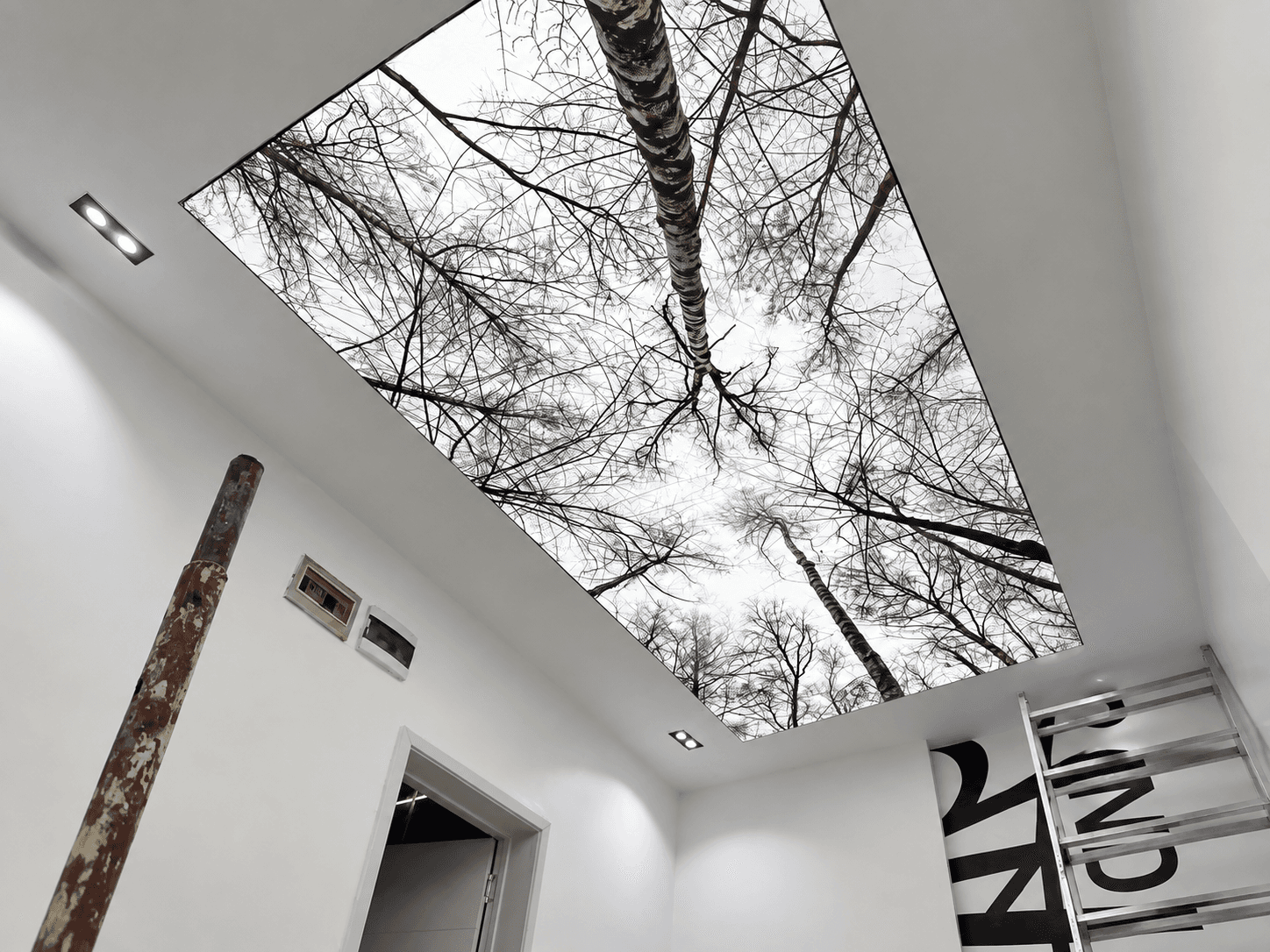
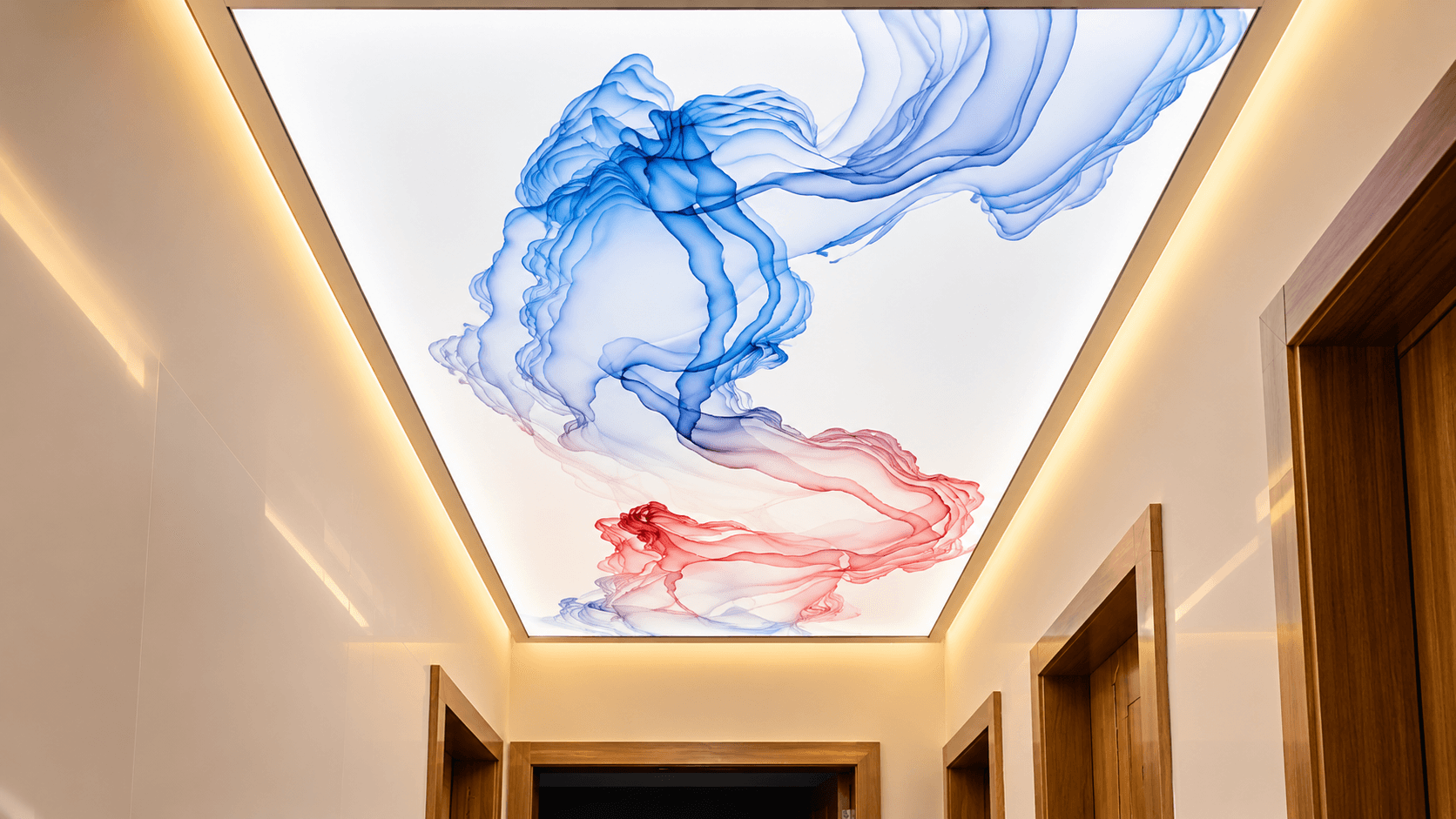
Fabric is the stronger choice if design matters. Because it is printed, it can carry a sky, a marble pattern, an abstract artwork or a company logo. If you want something unique, look at our custom printed stretch ceiling option, where you send your design on WhatsApp. For ideas, browse these custom printed ceiling fabric designs for luxury interiors. If you prefer a clean, plain look, our premium white stretch ceiling fabric gives a calm, even surface.
PVC wins when you want shine. A gloss or mirror finish reflects light and makes a small room feel taller, which suits narrow corridors and compact shops. The trade-off is that glossy PVC shows every reflection, including cables, furniture and any imperfection in the film.
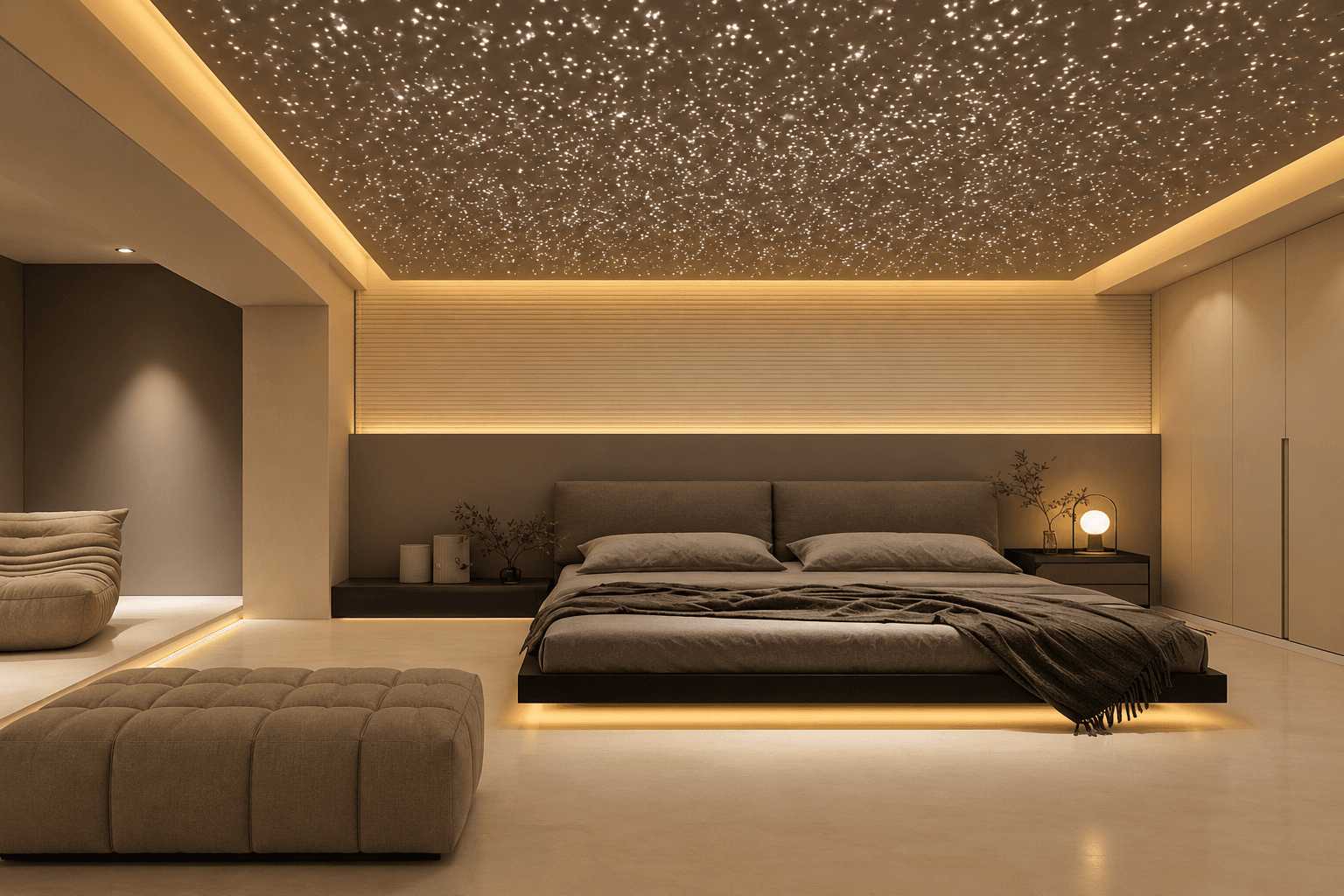
Lighting works with both. A translucent sheet can be backlit with LED panels or strips for a glowing ceiling, while opaque sheets take recessed spotlights. A recessed COB downlight is a popular pairing, and our COB downlight guide explains wattage, beam angle and CRI. For soft edge glow, use a silicone LED profile. If you want a starry look, a fiber optic star ceiling works behind perforated or translucent sheets.
Which One for Which Room?
For bedrooms and living rooms, pick fabric for its matte finish, quiet look and printing options. For bathrooms, kitchens and laundry rooms, pick PVC for waterproofing. For offices and showrooms, fabric is usually better because seamless sheets look professional over large areas. You can see this in our office stretch ceiling project and our car showroom ceiling installation in Islamabad. If you are still weighing this against a traditional ceiling, read stretch ceiling vs false ceiling before you decide.
FAQs
Is a PVC or fabric stretch ceiling better for a bathroom?
PVC is usually the safer choice for bathrooms because the film is waterproof and handles steam well. Fabric breathes, which is great for normal rooms but less ideal where water splashes or condenses daily. Always pair either option with a good extractor fan.
Which lasts longer, PVC or fabric?
Both can last many years when properly installed. Fabric tends to hold its tension and colour evenly, while PVC can stiffen or yellow with heat over time. Installation quality and fixture placement affect lifespan more than the material itself.
Can I print a design on a stretch ceiling?
Yes, fabric is the better option for printing because it holds sharp, detailed images. You can send your design to Axion Light on WhatsApp and we will advise on size and layout. PVC is mostly used in plain colours and finishes.
Where can I buy a stretch ceiling near me in Islamabad?
Axion Light supplies and installs stretch ceilings in Islamabad, Rawalpindi and across Pakistan. You can read our guide on stretch ceiling near me to know what to check before you buy.
Conclusion
There is no single winner in the PVC vs fabric stretch ceiling debate, only the right material for each room. PVC gives you waterproofing, shine and a lower upfront price, so it suits wet areas and tight budgets. Fabric gives you a seamless matte finish, printing options and a more refined look, so it suits homes, offices and showrooms where appearance matters. Tell Axion Light your room size, usage and budget, and we will recommend the material and lighting plan that gives you the best value for years.