Fiber Optic Lights for Pools and Ceilings: Creative Lighting Applications
By Admin | 9/8/2026
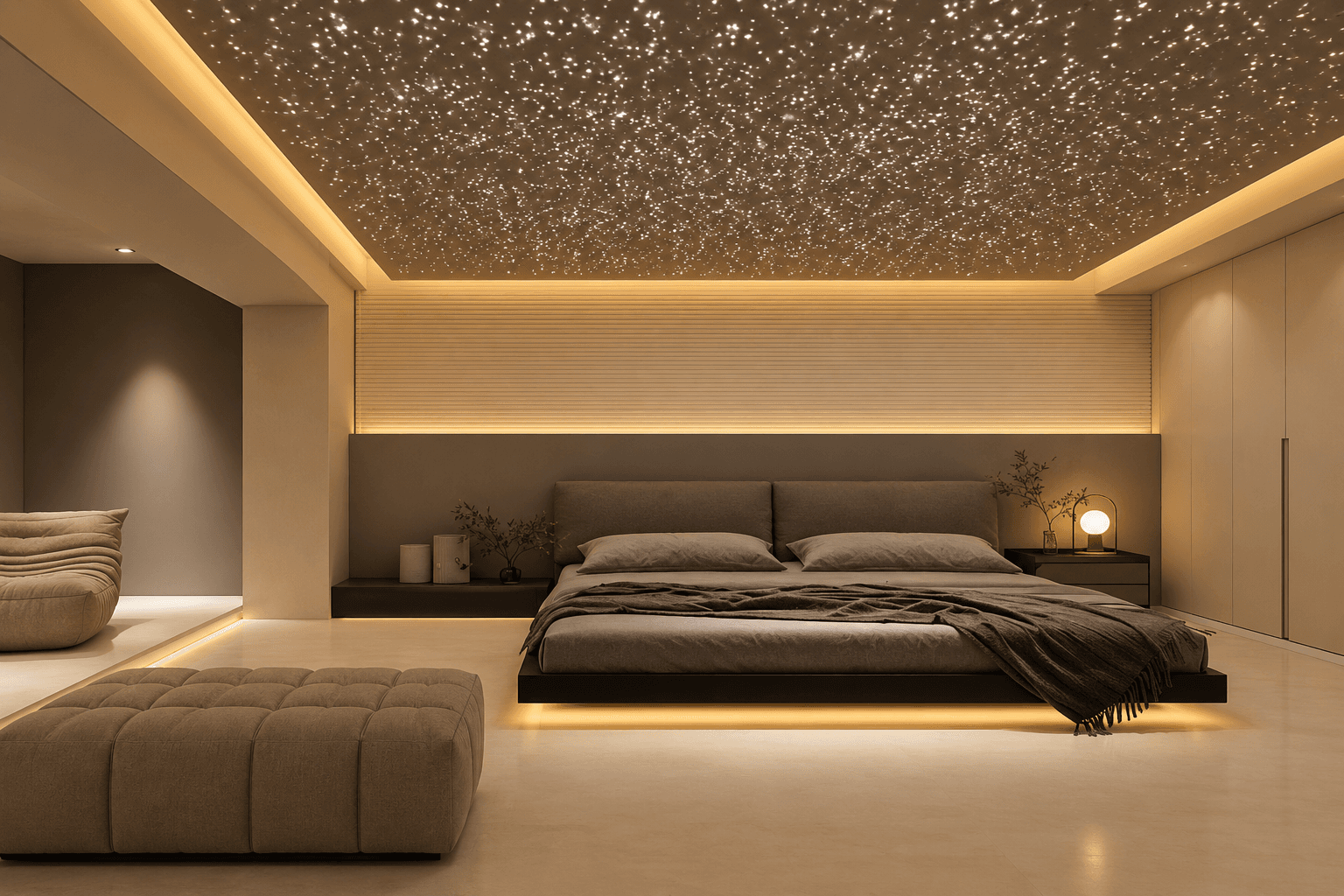
Fiber optic lighting is becoming a popular choice for people who want something more creative than conventional LED fixtures. Instead of using a visible bulb at every lighting point, fiber optic systems create multiple tiny points of light from optical fibers connected to a light source. This makes them especially useful for decorative ceilings, swimming pools, entertainment areas, restaurants, hotels, and feature spaces.
For homeowners, architects, interior designers, and commercial property owners in Pakistan, fiber optic lights can provide a completely different atmosphere without making the lighting installation look bulky. At Axion Lights, fiber optic solutions can be used to create customized lighting effects according to the space, ceiling design, pool layout, and desired visual effect.
Whether you are planning a starry ceiling, upgrading a swimming pool, designing a home theatre, or creating an eye-catching commercial space, this guide explains where fiber optic lighting works best, what options are available, how it compares with standard lighting, and what you should consider before buying.
What Are Fiber Optic Lights?
Fiber optic lighting uses thin optical fibers to transmit light from a central illuminator or light engine to multiple lighting points. Unlike a conventional LED bulb, the light-producing component can remain away from the visible lighting points while the fiber ends distribute the light across a ceiling, wall, floor, or pool area.
This makes the technology particularly interesting for decorative applications.
For example, hundreds of fiber ends can be installed across a ceiling to create a realistic starry-sky effect. Different densities and patterns can be used to create everything from a subtle scattered effect to a dramatic galaxy-inspired ceiling.
For pools, fiber optic systems can be planned around the pool perimeter or incorporated into specially designed underwater lighting applications, depending on the system and installation requirements.
The biggest attraction is flexibility. The fibers are extremely small, so they can be incorporated into designs where traditional fixtures would be difficult to install.
Creative Applications of Fiber Optic Lighting
1. Starry Fiber Optic Ceilings
One of the most recognizable applications is a fiber optic star ceiling. Small points of light are distributed across a ceiling to imitate stars in the night sky.
This works particularly well in:
Home theatres
Bedrooms
Lounges
Restaurants
Hotels
Entertainment rooms
Luxury interior spaces
Reception areas
The pattern does not have to be perfectly uniform. In fact, irregular spacing often produces a more natural appearance. Designers can also create specific patterns, concentrated star clusters, borders, or feature areas.
Axion Lights can help customers select the appropriate fiber optic components and plan a design according to the desired visual effect.
2. Fiber Optic Lighting for Swimming Pools
Pools are another creative application where lighting can dramatically change the appearance of the space after sunset.
Fiber optic pool lights can be used for decorative effects around swimming pools and water features. Because the lighting source and fiber arrangement can be designed separately, fiber optic systems can provide interesting design possibilities compared with conventional visible fixtures.
Pool lighting should always be planned according to the environment, waterproofing requirements, electrical safety, and the specific fiber optic system being installed. Professional installation is especially important for swimming pool applications.
3. Home Theatre Ceilings
A dark home theatre can become much more atmospheric with a subtle star ceiling. Rather than using bright ceiling fixtures that distract from the screen, small fiber optic points provide decorative illumination while maintaining the cinematic feel.
You can combine a fiber optic ceiling with concealed LED strips, wall lighting, or step lighting to create different lighting zones.
4. Restaurants and Cafés
Restaurants often need lighting that is functional but also contributes to the customer's experience.
A fiber optic ceiling can become part of the interior design rather than simply serving as a source of illumination. A scattered star pattern above dining tables, a glowing feature ceiling, or fiber optic accents around a bar can create a distinctive environment.
For businesses, this can be particularly useful when the goal is to make the interior memorable for customers and suitable for photography and social media content.
5. Hotels and Hospitality Spaces
Hotels can use fiber optic lighting in reception areas, lounges, corridors, restaurants, spas, and entertainment spaces.
A carefully designed ceiling can make a relatively simple architectural area look more premium. Fiber optics are also useful when designers want the lighting to blend into the architecture rather than having many visible fixtures.
Fiber Optic Lights vs Standard Decorative Lighting
Choosing between fiber optics and conventional lighting depends on the purpose of the project. Fiber optics are generally selected for their decorative flexibility rather than as a direct replacement for every general lighting fixture.
Feature | Axion Lights Fiber Optic System | Standard Decorative Lighting |
Visual effect | Starry and point-light effects | Usually fixture-based illumination |
Design flexibility | Very high for custom patterns | Depends on fixture size and shape |
Visible hardware | Minimal at lighting points | Fixture or LED source is often visible |
Ceiling applications | Excellent for star ceilings | Suitable for general and accent lighting |
Pool applications | Suitable for specialized decorative designs | Depends heavily on fixture type and waterproofing |
Custom patterns | Can be arranged into creative patterns | Usually determined by fixture placement |
Atmosphere | Soft, immersive and decorative | Depends on fixture and light source |
Best use | Feature ceilings, pools and entertainment areas | General, task and decorative lighting |
The right solution may also be a combination of both. For example, a home theatre could use fiber optics for the ceiling and LED linear lighting for functional illumination.
Why Choose Fiber Optic Lighting?
The main advantage is the ability to create an architectural lighting effect that is difficult to achieve with ordinary fixtures.
Fiber optic ceiling lights can be installed in different densities and arrangements, allowing the final appearance to match the interior design. Since the visible fiber points are very small, the ceiling can maintain a clean appearance.
Another advantage is design versatility. A customer does not have to choose from only a few standard fixture shapes. Fiber optic systems can be adapted to different patterns and spaces.
For decorative projects, this can make a significant difference.
Fiber optics are also particularly attractive for areas where designers want to keep the light source visually discreet. Instead of seeing a large fixture, the viewer mainly sees the individual points of light.
How to Plan a Fiber Optic Ceiling
Before installation, consider the size and shape of the ceiling and decide what visual effect you want.
A random star pattern generally creates a natural night-sky appearance, while a more structured arrangement can complement modern architectural designs. The number of fiber points also affects the final appearance.
The ceiling material matters as well. A suitable installation method should be selected according to whether the project uses a stretch ceiling, gypsum ceiling, wood feature, or another surface.
For a stretch ceiling project, fiber optic points can be incorporated into the fabric while keeping the main lighting equipment concealed above the ceiling.
The light engine should be positioned where it can be accessed for maintenance while remaining hidden from normal view.
What to Consider for Pool Fiber Optic Lighting
Pool projects require more planning than ordinary decorative ceiling installations.
Before purchasing, consider:
Pool size and shape – This determines the approximate fiber routing and lighting pattern.
Desired effect – Decide whether you want perimeter illumination, decorative points, or a feature pattern.
Water exposure – Components must be appropriate for the intended pool environment.
Light engine location – The system should allow practical access to the illuminator.
Installation method – Pool construction and finishing materials affect installation.
Electrical safety – Pool lighting should be installed by professionals familiar with electrical safety around water.
If you are unsure about the right configuration, discuss the project with Axion Lights before ordering rather than selecting components based only on appearance.
Fiber Optic Roll and Light Engine
A fiber optic system generally consists of optical fiber strands or a fiber optic roll and a light engine that supplies the illumination.
Axion Lights offers fiber optic lighting components such as fiber optic rolls for ceilings and fiber optic light engine options designed for decorative lighting applications. The appropriate configuration depends on the size of the project and the desired number and arrangement of light points.
The fiber itself does not need to look like a traditional light fixture. Its purpose is to carry the illumination from the light source to the selected termination points.
This makes it possible to hide the main equipment while maintaining a clean visual result.
Installation: Professional Planning Matters
Although the visible fiber points may look simple, the installation requires careful planning.
For a ceiling, the installer needs to determine the fiber pattern, drilling or fixing locations, routing, light-engine position, and finishing details. For a pool, additional attention is required for waterproofing, safe routing, access, and compatibility with the pool environment.
Poor planning can result in uneven spacing, unwanted visible cables, difficult maintenance access, or an effect that does not match the original design.
For this reason, it is better to finalize the lighting pattern before beginning installation.
If your project includes a stretch ceiling, you can also explore customized printed stretch ceiling fabric with fiber optic lighting to create a more distinctive ceiling design.
How Much Fiber Optic Lighting Do You Need?
There is no single quantity that works for every project.
A small bedroom ceiling might require a completely different arrangement from a large hotel lobby or swimming pool. The required fiber length and number of points depend on the dimensions of the area, installation method, pattern density, and desired brightness.
Instead of buying a random quantity, provide the supplier with the approximate dimensions of your project.
For example, tell Axion Lights:
Ceiling or pool dimensions
Type of surface
Desired star density
Preferred lighting effect
Whether you need a complete system or individual components
Project location
This information makes it easier to determine a practical configuration.
Where Should You Buy Fiber Optic Lights in Pakistan?
When purchasing fiber optic lighting, do not focus only on the price of the fiber roll or light engine. The compatibility of the complete system, installation requirements, fiber length, light output, and intended application are equally important.
Axion Lights provides lighting solutions for residential, commercial, hospitality, architectural, and decorative applications in Pakistan. Customers can discuss their project requirements before selecting a suitable fiber optic configuration.
If you are also comparing different decorative lighting solutions, LED strip lights can be combined with fiber optics to provide both functional and decorative illumination.
FAQs
Are fiber optic lights suitable for swimming pools?
Yes, specialized fiber optic systems can be used for decorative pool lighting applications. However, pool installations require proper waterproofing, safe electrical planning, and components suitable for the environment. Professional installation is strongly recommended.
Can fiber optic lights be installed in a normal ceiling?
Yes. Fiber optic systems can be incorporated into several ceiling types, depending on the construction and installation method. They are particularly popular for creating starry ceilings, feature ceilings, and decorative patterns.
Do fiber optic ceiling lights consume a lot of electricity?
Fiber optic systems use a central light engine rather than placing a separate conventional lamp at every visible point. Energy consumption depends on the specific light engine and operating conditions, so the exact electrical rating should be checked before purchasing.
Can I create a custom star pattern?
Yes. One of the major benefits of fiber optics is design flexibility. Fibers can be distributed in different densities and patterns to create random stars, concentrated areas, borders, or customized decorative designs.
Are fiber optic lights better than LED lights?
Neither is universally better because they serve different purposes. Fiber optics are excellent for decorative effects such as star ceilings, while LEDs are generally more versatile for general, task, accent, and architectural lighting.
Can fiber optic lights be used with a stretch ceiling?
Yes. Fiber optic points can be integrated into suitable stretch ceiling systems to create a starry-sky or custom illuminated ceiling. The installation should be planned with the stretch ceiling installer and lighting professional together.
How long do fiber optic lights last?
The lifespan depends mainly on the light engine and the quality of the components used. The optical fibers themselves do not work like conventional bulbs, so they should be evaluated separately from the illuminator when considering system lifespan.
Can Axion Lights help with a fiber optic lighting project?
Yes. Axion Lights can help customers understand the available fiber optic components and select a configuration according to the project requirements. Providing the ceiling or pool dimensions and intended design will make the recommendation more accurate.
Conclusion
Fiber optic lighting offers an opportunity to turn an ordinary ceiling, pool, theatre, restaurant, or hospitality space into a distinctive visual feature. Its biggest strength is not simply producing light but allowing designers to create patterns and effects that blend directly into the architecture.
For ceilings, fiber optic star ceiling designs can create a relaxing night-sky appearance, while specialized fiber optic pool lights can add an atmospheric effect to outdoor and water-based spaces. The system can also be combined with LED strips, linear lighting, stretch ceilings, and other architectural solutions for a complete lighting design.
The most important step is choosing the system according to your actual project rather than purchasing components based only on price. Consider the area size, installation surface, desired effect, fiber quantity, light engine, accessibility, and environmental conditions.
If you are planning a decorative lighting project in Pakistan, Axion Lights can help you explore fiber optic solutions based on your space and design requirements. Whether your goal is a starry home theatre ceiling, a luxury hotel feature, a restaurant ceiling, or creative pool lighting, a properly planned fiber optic system can make the lighting part of the architecture itself.