Double-Head Recessed Downlights (2x8W): When Two Heads Beat One for Living Rooms and Corridors
By Admin | 11/10/2026
Most people buy downlights by wattage alone. They pick one light, repeat it across the ceiling and hope the room feels bright. In a living room or a long corridor, that often leaves dark patches between fixtures. It also means cutting far more holes in a finished ceiling than you need.
A double head downlight solves this by putting two light sources in one fixture. At Axion Lights, our 2x8W COB downlight is built for this. You get two 8W heads, 16W in total, in a single rectangular cut-out. This guide covers where it helps most, how to space it and whether it is right for your home.
What Is a Double-Head Recessed Downlight?
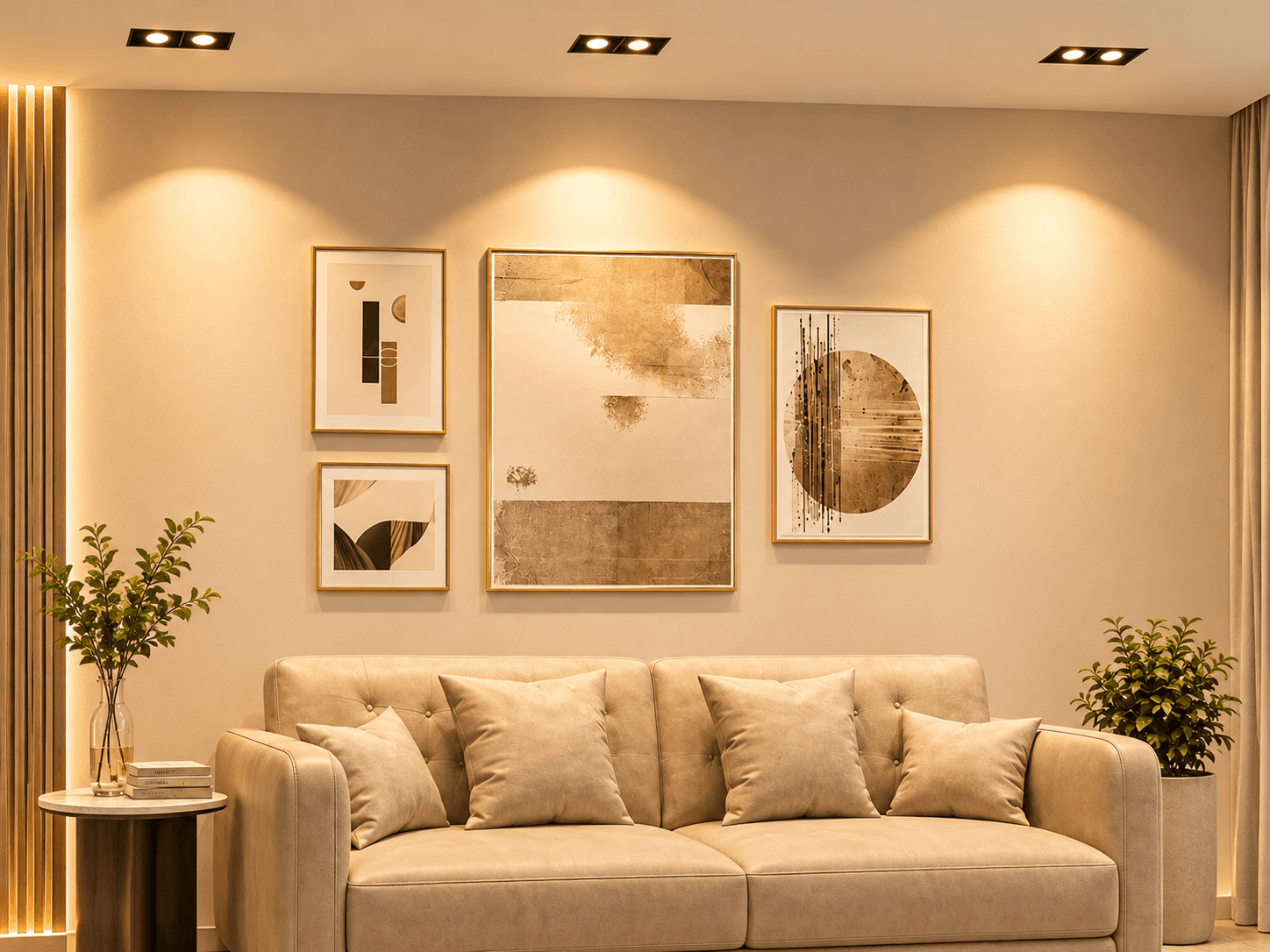
A double-head downlight is one housing with two COB light sources side by side. It sits flush inside a false ceiling and shows two small, clean light openings instead of one large circle.
Compared with a normal round fixture, you get:
Wider, more even light from a single installation point
Fewer ceiling cut-outs for the same amount of light
A modern, architectural look that suits contemporary interiors
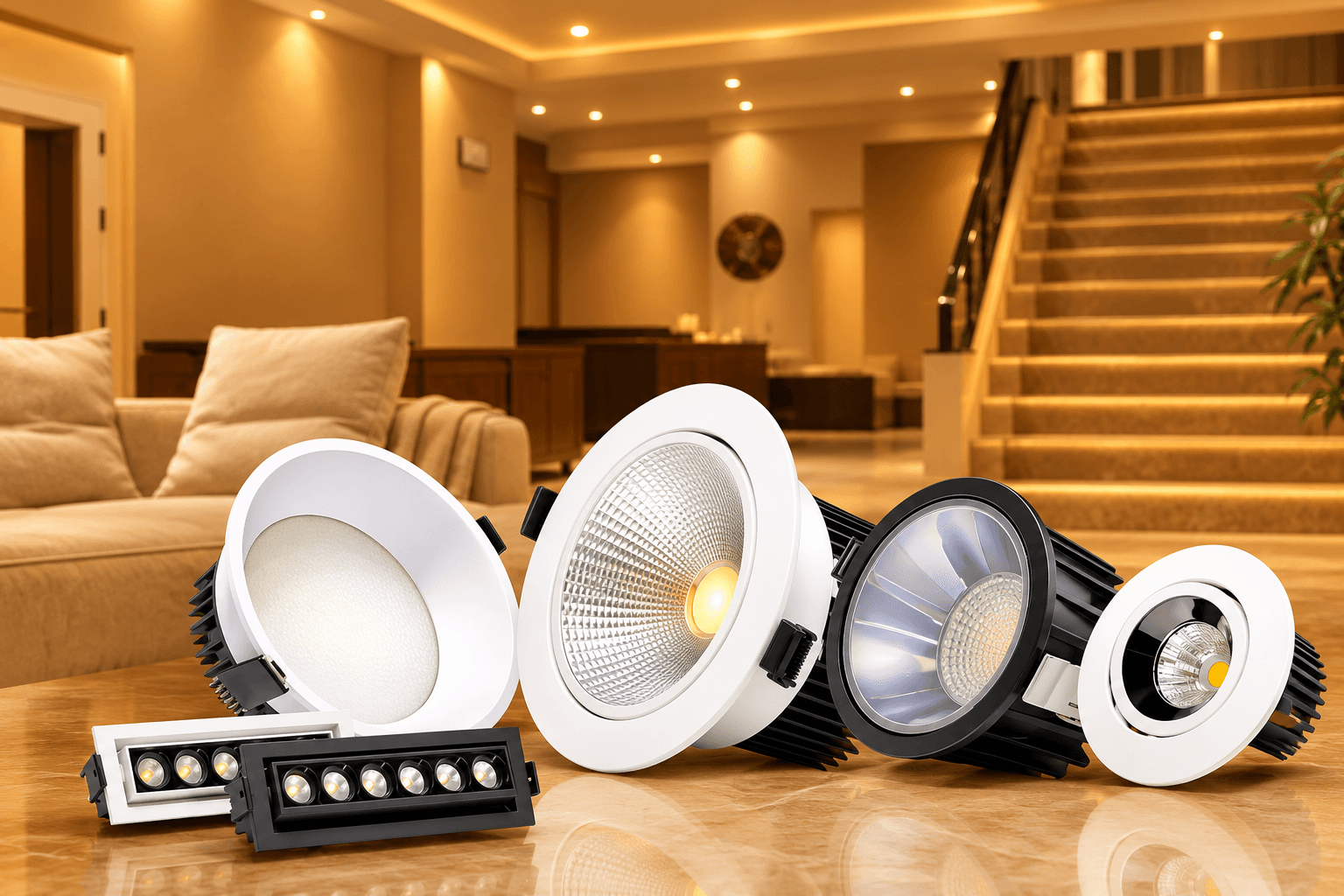
The Axion Lights 2x8W model uses Epistar COB chips in an aluminium body with a black or white powder-coated finish. COB (chip-on-board) gives smooth, continuous light without the dotted look of older SMD modules. If you are weighing the two technologies, our guide on COB vs SMD LEDs explains the difference in plain language.
Why Two Heads Beat One in a Living Room
A living room has several jobs. You watch TV, talk with guests, read and sometimes eat. One central light or a grid of single spots rarely handles all of that well. A two-head fixture helps in three ways.
It covers more floor per fixture. Two heads throw light across a wider area, so you can use fewer fixtures and still avoid dark corners. That means a cleaner ceiling and less cutting and fitting work.
It works with layered lighting. Use the downlights for general light, then add spotlights for art and shelves, and warm accent strips for mood. This is the base of good layered lighting design, and it is why professionally lit homes feel comfortable rather than flat.
It looks deliberate. Two aligned openings read as a design choice. You can see the same finish in our luxury home theater project in Islamabad and the J7 Group residence in G-11, where ceiling lines and light placement were planned together.
Corridors: Where a Double Head Really Pays Off
Corridors are narrow, long and usually short on natural light. A single round downlight often creates bright circles with shadows between them, which makes the passage feel uneven and tiring to walk through.
A two-head fixture is a better fit because the rectangular shape follows the corridor's length. Here is a practical starting layout (a rule of thumb, adjusted for ceiling height and wall colour):
Spacing: place fixtures roughly 3 to 4 feet apart in a standard home corridor so the light overlaps smoothly.
Position: keep them along the centre line of the ceiling for even light on both walls.
Ends: put one fixture near each door or turn so entry points never feel dark.
The same layout works in offices, clinics and academies. Our NAB Academy indoor lighting installation and the corporate office at Meezan Tower show how repeating fixtures in a clean rhythm keeps long passages comfortable.
Axion Lights 2x8W vs a Standard Single-Head Downlight
Here is how our 2x8W model compares with a typical single-head recessed downlight in everyday use.
Feature | Axion Lights 2x8W Double Head | Typical Single-Head Downlight |
Light sources | 2 COB heads in one fixture | 1 head |
Total power | 16W (2 x 8W) | Usually 7W to 12W |
Light spread | Wide, along the fixture length | Round, concentrated pool |
Best fit | Living rooms, corridors, lobbies, showrooms | Small rooms, accents, bathrooms |
Ceiling cut-outs needed | Fewer for the same coverage | More for the same coverage |
Body | Aluminium, black or white powder coat | Varies; often plastic or thin metal |
Look | Modern, architectural, rectangular | Standard round |
The point is not that one is always better. A single head still suits a small bathroom or a narrow accent spot. The 2x8W earns its place where you want broader, smoother coverage without crowding the ceiling.
Key Specifications of the Axion Lights 2x8W
Specification | Details |
Power | 2 x 8W (16W total) |
Light source | Epistar COB chips |
Colour temperature | 3000K warm, 4000K neutral, 6500K cool |
Front size | 180mm x 100mm x 79.5mm |
Cut-out size | 165mm x 85mm |
Driver | Isolated, 185V to 265V, 50/60Hz |
Body finish | Aluminium, black or white powder coat |
Price | From Rs. 3,000 |
The wide voltage range of 185V to 265V is useful in Pakistan, where supply is often unstable. For more on protecting your lights, read our guide to maintaining LED lights in Pakistani conditions.
Choosing the Right Colour Temperature
The same fixture can feel cosy or clinical depending on the colour you pick.
3000K (warm white): best for living rooms, lounges and bedrooms. It feels relaxed and flatters wood, fabric and skin tones.
4000K (neutral white): a balanced choice for corridors, study rooms and dining areas. It is clear without feeling cold.
6500K (cool white): suits offices, work areas and showrooms where sharp, bright light is the goal.
For a typical Pakistani home, 3000K in the living room and 4000K in the corridor is a safe combination. Our comparison of warm vs cool lighting goes deeper on this. Try to keep one colour temperature across rooms that open into each other, so the light does not change abruptly as you walk through the house.
Installation, Cut-Out and What to Check First
Before ordering, check these points so installation goes smoothly:
Ceiling depth. The fixture is 79.5mm deep, so make sure your false ceiling has enough space above it. If your void is very shallow, look at our 6W slim LED downlight instead.
Cut-out size. Mark a 165mm x 85mm rectangle. This is not a round hole, so mark carefully before cutting.
Glare. If you sit under the light for long periods, a deeper-set option such as our anti-glare COB downlight may feel easier on the eyes. Our guide on anti-glare downlights explains why.
Dimming. The 2x8W listing does not mention dimming. If you want adjustable brightness, choose our dimmable 12W COB downlight and read which dimmer works with LED downlights first.
If you plan a new false ceiling, our guide to stretch ceiling vs false ceiling helps you choose the surface these lights will sit in.
What Will It Cost to Run?
A 16W fixture is easy to calculate. At 6 hours of use per day, it draws about 96Wh daily, roughly 2.9 units (kWh) per month. Ten fixtures would use about 29 units a month, far less than older halogen or fluorescent setups. For a worked example, see how much electricity a 12W COB downlight uses, and for wider savings ideas, read how LED lights reduce electricity bills in Pakistan.
On budget, the 2x8W starts at Rs. 3,000, and you can message Axion Lights on WhatsApp for bulk discounts. If you are comparing options, our LED ceiling lights price guide for Pakistan and our COB downlight wattage, beam angle and CRI guide give you the context to decide.
For larger spaces such as showrooms or big halls, a multi-head fixture goes further. See the 3x8W COB downlight and our article on 3x8W downlights for showrooms and large halls.
FAQs
1. What is a double head downlight?
It is one recessed fixture holding two light sources. Axion Lights' 2x8W model has two 8W COB heads, giving 16W in total. You get wider, smoother light from a single ceiling cut-out, which suits living rooms and corridors well.
2. How far apart should I place 2x8W downlights in a corridor?
A good starting point is 3 to 4 feet apart along the centre line of the ceiling. Adjust for ceiling height and wall colour. Lower ceilings need tighter spacing, while higher ceilings can take wider gaps.
3. Which colour temperature is best for a living room?
3000K warm white is the most popular choice because it feels relaxed and comfortable in the evening. If you also use the room for reading or work, 4000K neutral white is a good alternative.
4. What cut-out size does the Axion Lights 2x8W downlight need?
The cut-out is 165mm x 85mm and the fixture is 79.5mm deep. Confirm your false ceiling has enough depth before ordering. If you are unsure, message our team on WhatsApp and we will help you check.
Conclusion
A double-head downlight is a simple way to light a living room or corridor more evenly, with fewer cut-outs and a cleaner look. Axion Lights' Recessed COB Downlight 2x8W combines Epistar COB chips, a durable aluminium body, three colour temperatures and a wide-voltage driver at a practical price. Choose 3000K for cosy rooms, 4000K for passages and study areas, and 6500K for work spaces. Check your ceiling depth first, then plan your spacing. If you want help with layout or bulk pricing, contact Axion Lights through our LED lights in Pakistan page or message us on WhatsApp.