Stretch Ceiling Maintenance Guide: How to Clean Barrisol Fabric and Keep It Wrinkle-Free
By Admin | 11/25/2026
A stretch ceiling looks sharp on the day it is installed. Smooth surface, clean lines, no joints. The real question most homeowners ask a few months later is simple: how do I keep it looking like this? At Axion Light, this is one of the most common questions we get from clients in Islamabad, Rawalpindi and Lahore. The good news is that a Barrisol ceiling needs far less care than a painted false ceiling, as long as you follow a few basic rules.
This guide covers what you actually need to know: how to dust and wash the fabric, how to handle stains, what causes wrinkles, and which habits quietly damage a ceiling. Everything is written for Pakistani homes and offices, where dust, summer heat, monsoon humidity and kitchen oil are the real enemies.
Why Stretch Ceiling Maintenance Matters More Than You Think
If you are new to the product, our guide on what is Barrisol explains the material in detail. In short, the ceiling is a tensioned membrane held by a perimeter track, so it has no seams to crack and no paint to peel. That is why it ages better than plaster or gypsum.
But a membrane is still a surface. Dust settles on it, cooking vapour coats it and smoke from cigarettes or incense dulls it. Left alone for a few years, a white ceiling can turn slightly yellow or grey, and that is the number one complaint we hear. Regular stretch ceiling maintenance prevents this and protects the finish you paid for. If you are still comparing options, our stretch ceiling pros and cons article gives an honest look at lifespan and care.
How to Clean Barrisol Fabric Step by Step
Start with the gentlest method and only move to the next one if it is needed.
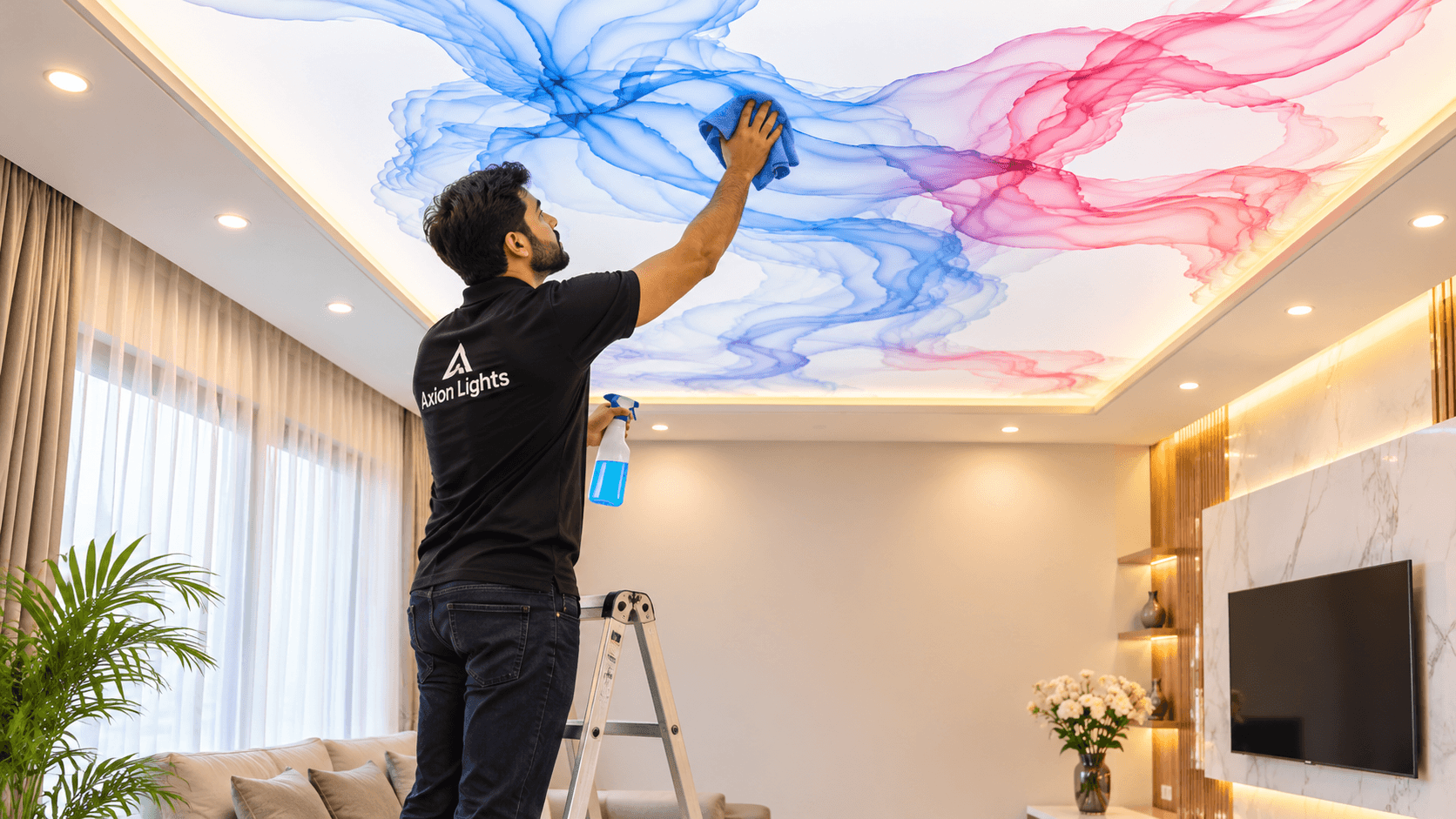
Step 1: Dry dusting. Once every two to three months, wipe the ceiling with a clean, dry microfibre cloth or a soft, dry mop head. Move in one direction, using light strokes. Do not press. Use a stepladder rather than stretching from a chair, so your pressure stays even.
Step 2: Damp wipe. For general dullness, use a soft cloth dampened in lukewarm water with a few drops of mild neutral soap. Wring it well. The cloth should feel barely damp, not wet. Wipe gently, then follow with a second cloth dampened in plain water to remove soap traces, and finish with a dry cloth.
Step 3: Spot treatment. For a small mark, dab, do not rub. Rubbing pushes the stain deeper and can leave a shiny patch on fabric.
Always test any method on a hidden corner first. The ideal process is the same for a plain white ceiling and for a printed stretch ceiling, but printed surfaces deserve extra gentleness, so skip any soap at all unless the installer confirms it is safe for that print.
What You Should Never Use
Most damage to a stretch ceiling comes from the cleaning product, not from dirt. Keep these away from the surface:
Bleach, acetone, thinner, petrol or strong solvents
Abrasive pads, scouring sponges or stiff brushes
High-pressure steam cleaners or soaking wet cloths
Sharp tools, rings or anything that can snag the membrane
If your fabric supplier gave you specific care instructions, those come first. Fabric types differ, and the safest guidance always comes from whoever supplied your material. Our PVC vs fabric stretch ceiling comparison explains why the two materials behave differently when cleaned.
Dealing With Common Stains in Pakistani Homes
Different rooms bring different problems, so here is a quick way to think about them.
Kitchen and dining areas: Oil vapour from daily cooking settles as a thin sticky film that traps dust. Wipe these ceilings every month or two with the damp-cloth method above, and keep your exhaust fan running while cooking.
Bedrooms and lounges: Dust, mosquito marks and the odd water droplet are the usual issues. Dry dusting handles most of it.
Smoking or incense rooms: Yellowing builds up fast. Clean more often and ventilate well.
Bathrooms and humid corners: Moisture and poor airflow lead to dull patches. Improve ventilation first, then clean.
For a deeper view of how a stretch surface performs around leaks and moisture, read our guide on stretch ceiling vs false ceiling.
How to Keep a Stretch Ceiling Wrinkle-Free
A properly fitted ceiling should look flat for years. If you see waves or creases, the cause is usually one of these:
Installation tension was uneven. This is the most common reason, and it shows within weeks, not years.
Extreme heat near the ceiling. A hot light source mounted too close can affect the surface.
Humidity and temperature swings. Monsoon moisture followed by dry heat can change how the membrane sits.
Poor track or fixing quality. Cheap tracks or loose fixings let the edge slip.
Pressure from people or objects. Pushing, hanging items or leaning ladders against the surface can leave marks.
You cannot fix tension yourself, and you should not try pulling the edge out of the track. If you see sagging or creases, call the installer who fitted it. Good teams can re-tension the surface neatly. This is also why choosing a trained installer matters. Our page on stretch ceiling installation shows what a proper process looks like from measurement to finish.
Lighting and Your Ceiling: Heat Matters
Light fittings affect ceiling life more than most people realise. Cheap, hot fittings placed too close to the membrane are a risk. This is where good fixtures help. Efficient COB LED downlights run cooler than old halogen lamps, and fiber optic star lights keep the heat source in a remote engine, away from the fabric. Our guide on how to maintain LED lights also covers heat and dust around fixtures.
Axion Light plans fixture positions and cut-outs together with the ceiling, so the lights, the track and the fabric all work as one system. If you want to see how this looks in a real space, check our office stretch ceiling project and the Barrisol case study.
Axion Light Stretch Ceiling vs Standard Ceiling Care
Factor | Axion Light Stretch Ceiling | Standard Painted or Gypsum Ceiling |
Routine cleaning | Dry dust and damp wipe | Hard to clean without damaging paint |
Repainting | Not needed | Every 2 to 4 years |
Stain removal | Gentle wipe on most marks | Often needs repainting |
Cracks and joints | No visible joints | Cracks can appear over time |
Moisture reaction | Smooth surface, easier to wipe | Can bubble, peel or stain |
Light fixture options | Designed cut-outs and fittings | Depends on the work done |
Care effort | Low, with simple habits | Medium to high |
This is general guidance. Exact results depend on the fabric, room conditions and installation quality.
Quick Maintenance Calendar
Every two to three months, dry dust the surface. Every six months, do a damp wipe in living areas. Monthly, wipe kitchen ceilings. After monsoon, check corners and edges for any change. Once a year, inspect the surface near light fittings.
If you are planning a new ceiling and want to know costs first, read our stretch ceiling price in Pakistan guide. If you want a supplier close to you, see stretch ceiling near me. You can also browse our white stretch ceiling fabric and custom printed stretch ceiling options.
FAQs
1. Can I wash a Barrisol stretch ceiling with water?
Yes, but only lightly. Use a soft cloth dampened with lukewarm water and a little mild soap, wrung out well. Never pour water on the surface or use a soaking wet cloth. Always finish with a dry microfibre cloth.
2. How often should I clean my stretch ceiling?
Dry dusting every two to three months is enough for most rooms. Kitchens need a damp wipe every month or two. Rooms with smoke or heavy dust may need cleaning more often to prevent yellowing.
3. Why is my stretch ceiling wrinkled or sagging?
Most wrinkles come from uneven tension during installation, heat from nearby fixtures or temperature and humidity changes. Do not pull the edges yourself. Contact the installer, who can inspect and re-tension the surface properly.
4. Can I use a steam cleaner or pressure washer?
No. Steam and pressure can damage the surface and affect the edges. Stay with gentle dry and damp wiping. If a stain does not come off, ask your installer instead of increasing the force.
Conclusion
Keeping a stretch ceiling clean and flat is not hard. Dust it regularly, wipe it gently, avoid harsh chemicals, protect it from direct heat and call a professional when something looks wrong. These small habits help a Barrisol ceiling stay smooth and bright for years, even in dusty and humid Pakistani conditions.
If you are planning a new ceiling, or your current one needs a check, the Axion Light team can guide you on fabric choice, lighting and installation. Message us with your room size and requirement, and we will suggest the right setup.