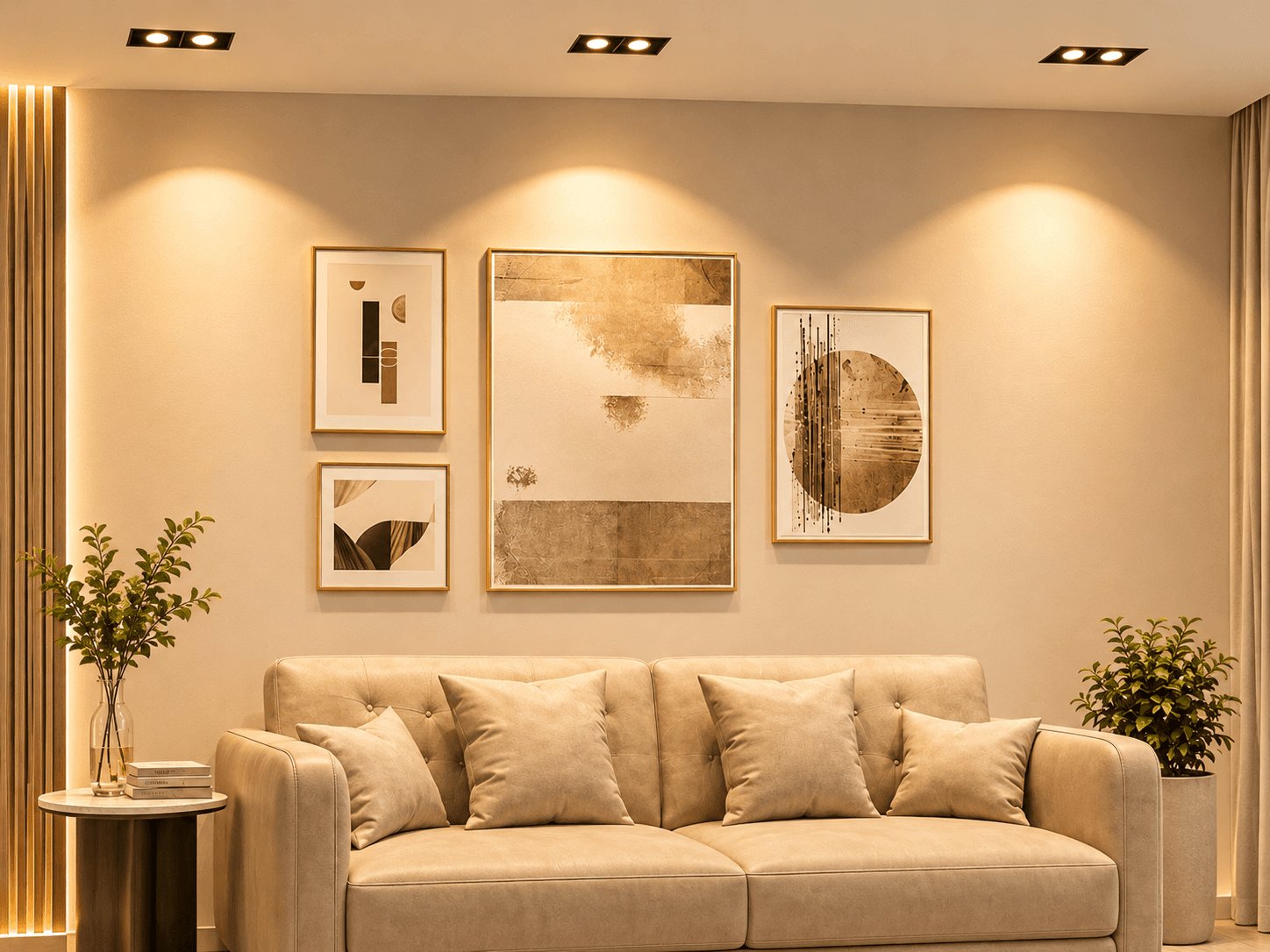
High-Lumen COB Downlights for Large Rooms: Why Die-Cast Aluminium Body Matters for Heat and Lifespan
By Admin | 11/13/2026
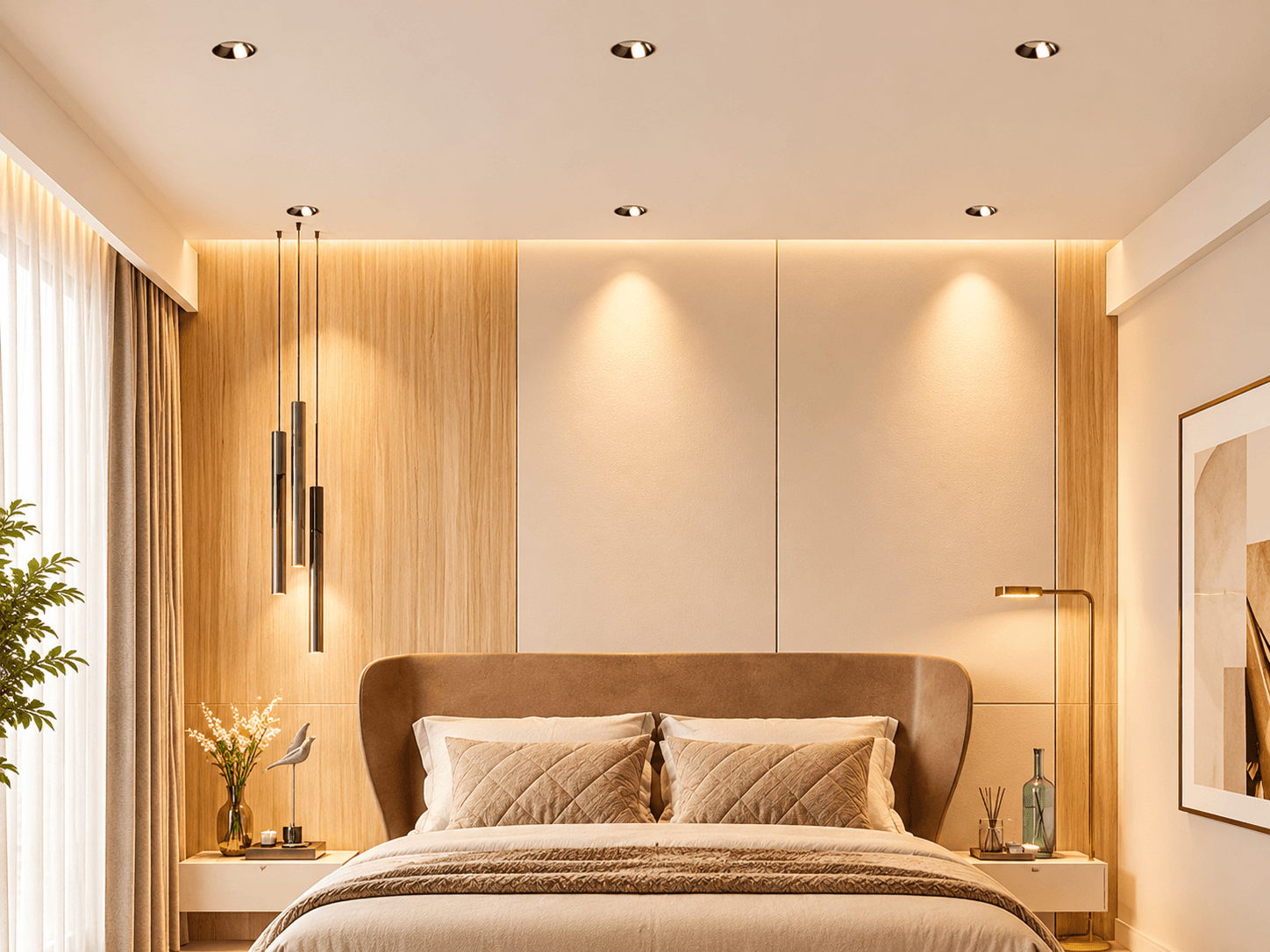
Large rooms are hard to light. A hall, showroom, open-plan office or big living room needs far more brightness than a bedroom, and that extra output brings a problem many buyers never ask about: heat. A downlight that looks fine on day one can start flickering, dimming or turning yellow within a year if its body cannot carry that heat away.
If you are choosing a high lumen COB downlight for a big space, the fixture body matters as much as the wattage on the box. This guide explains why, in plain language, so you can buy once and not replace twice. Axion Light has supplied downlights for homes, offices and commercial spaces across Pakistan, and the same questions come up every time.
What a High-Lumen COB Downlight Actually Gives You
COB stands for chip-on-board. Instead of many separate LED dots, a COB downlight packs the chips into one compact light source. That gives smooth, even light without the spotty, multi-dot look of cheaper fixtures. If you are still deciding between technologies, our guide on COB vs SMD LEDs covers it.
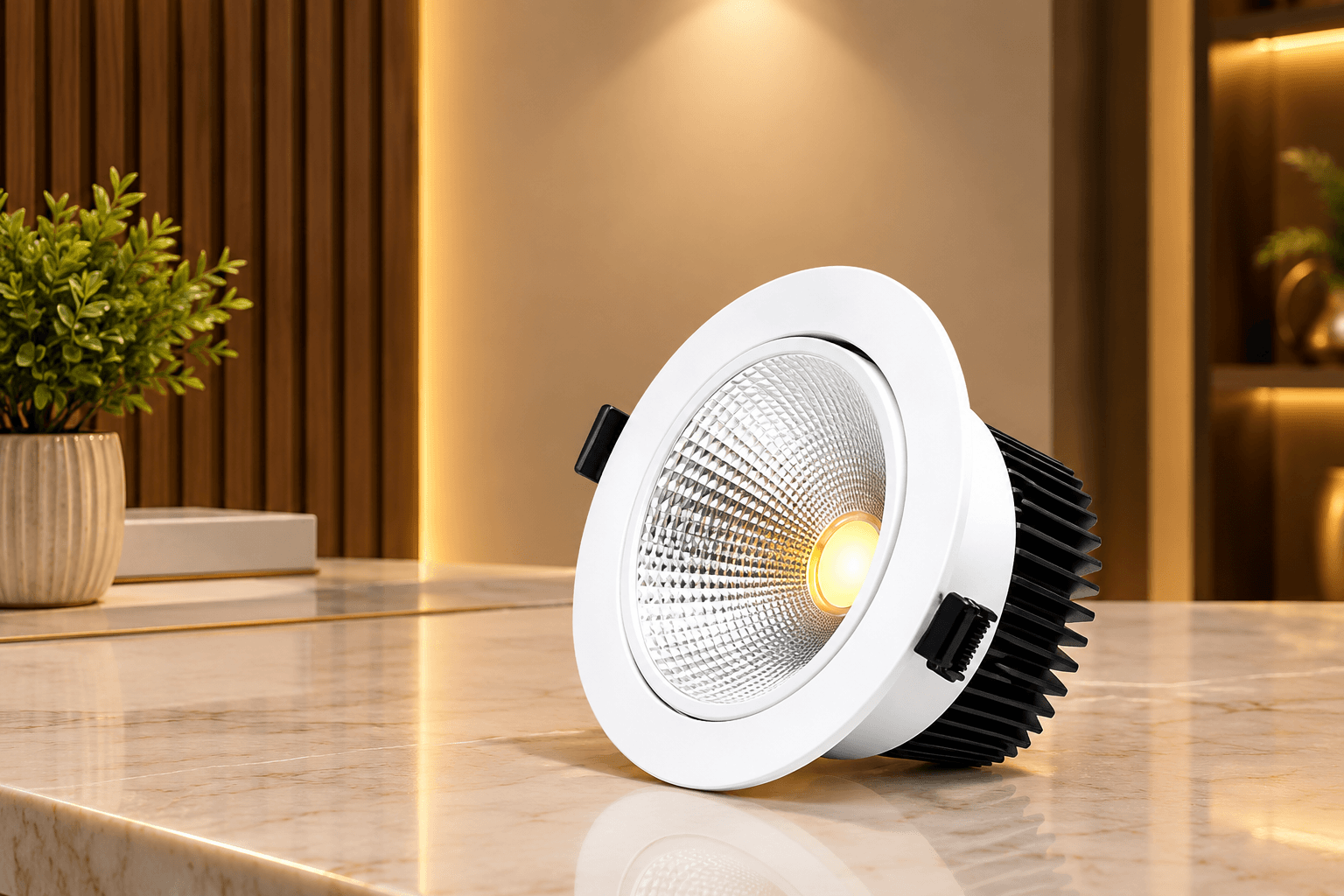
For large rooms, the Axion Light COB downlight is built around a high-output San'an COB chip with efficiency of up to 90 lumens per watt. In rough numbers, the 10W version can give up to around 900 lumens and the 20W version up to around 1,800 lumens. It uses a 60° beam, wide enough to cover floor area but focused enough to light shelves, counters and walls properly.
To understand what the wattage, beam angle and CRI numbers mean, read our COB LED downlights guide before you order.
Why Die-Cast Aluminium Body Matters
An LED does not burn out the way an old bulb does. It fades slowly, and the biggest cause of fading is heat at the chip and driver. High-lumen COB chips produce more heat in a small area, so the body has to pull that heat out and spread it into the air. This is where a die-cast aluminium downlight beats a thin sheet or plastic body.
Here is what the body does in practice:
It moves heat away from the chip. Die-cast aluminium conducts heat far better than plastic or thin sheet metal, so the chip runs cooler and keeps its brightness for longer.
It protects the driver. The driver is usually the first part to fail in a hot fixture. A cooler body means a longer-living driver and fewer sudden failures.
It holds colour steady. Overheated LEDs shift colour and lose brightness unevenly. Good heat control keeps your 3000K warm light looking the same in year three as in month one.
It handles Pakistani conditions. Ceiling voids in summer trap a lot of heat, and voltage swings are common. A solid body combined with a wide input range of AC 85–265V is a safer match than a light-weight fixture. Our tips on LED maintenance in Pakistani conditions explain more.
The Axion Light downlight pairs the die-cast body with an isolated driver and a rated life of up to 50,000 hours. Real life depends on installation and use, but good heat control is what makes a number like that believable.
Axion Light Die-Cast Downlight vs Standard Downlight
Feature | Axion Light High-Lumen COB Downlight | Standard Budget Downlight |
Body material | Die-cast aluminium | Thin sheet metal or plastic |
LED source | San'an high-lumen COB chip | Often unbranded chip |
Efficiency | Up to 90 lm/W | Usually lower |
Heat control | Body acts as a heat sink | Heat stays trapped near chip |
Beam angle | 60°, good for general and accent light | Often unclear or inconsistent |
Driver | Isolated LED driver | Often non-isolated, basic |
Input voltage | AC 85–265V | Frequently narrower |
Rated lifespan | Up to 50,000 hours | Often fades much earlier |
Wattage options | 10W, 15W, 20W | Limited |
The point of this table is simple. In a large room you run the lights for many hours a day, so the cheaper fixture usually costs more over time once you count replacements and labour.
How to Choose Wattage and Spacing for a Large Room
Start with the room's use, then its ceiling height.
10W suits corridors, small offices and bedrooms. 15W is the all-rounder for big living rooms, kitchens and medium commercial areas. 20W is the pick for showrooms, retail stores, halls and high ceilings.
As a rough starting point, a living area needs around 15 to 20 lumens per square foot. A 400 sq ft hall would therefore need roughly 6,000 to 8,000 lumens, which means about five or six 15W lights. For an even look, space lights about 4 to 5 feet apart under a 9 to 10 foot ceiling, and move to 20W as the ceiling rises. This is a guide, not a fixed rule, and a layout check is always worth doing.
A few more tips that save money:
Keep the same spacing across the room so you avoid dark patches between fixtures.
Leave enough clearance above the false ceiling so heat can escape.
If you want mood lighting later, plan for a dimmable COB downlight and check our guide to a dimmer switch for LED downlights first.
If glare bothers you in an office, an anti-glare downlight sits deeper and is easier on the eyes.
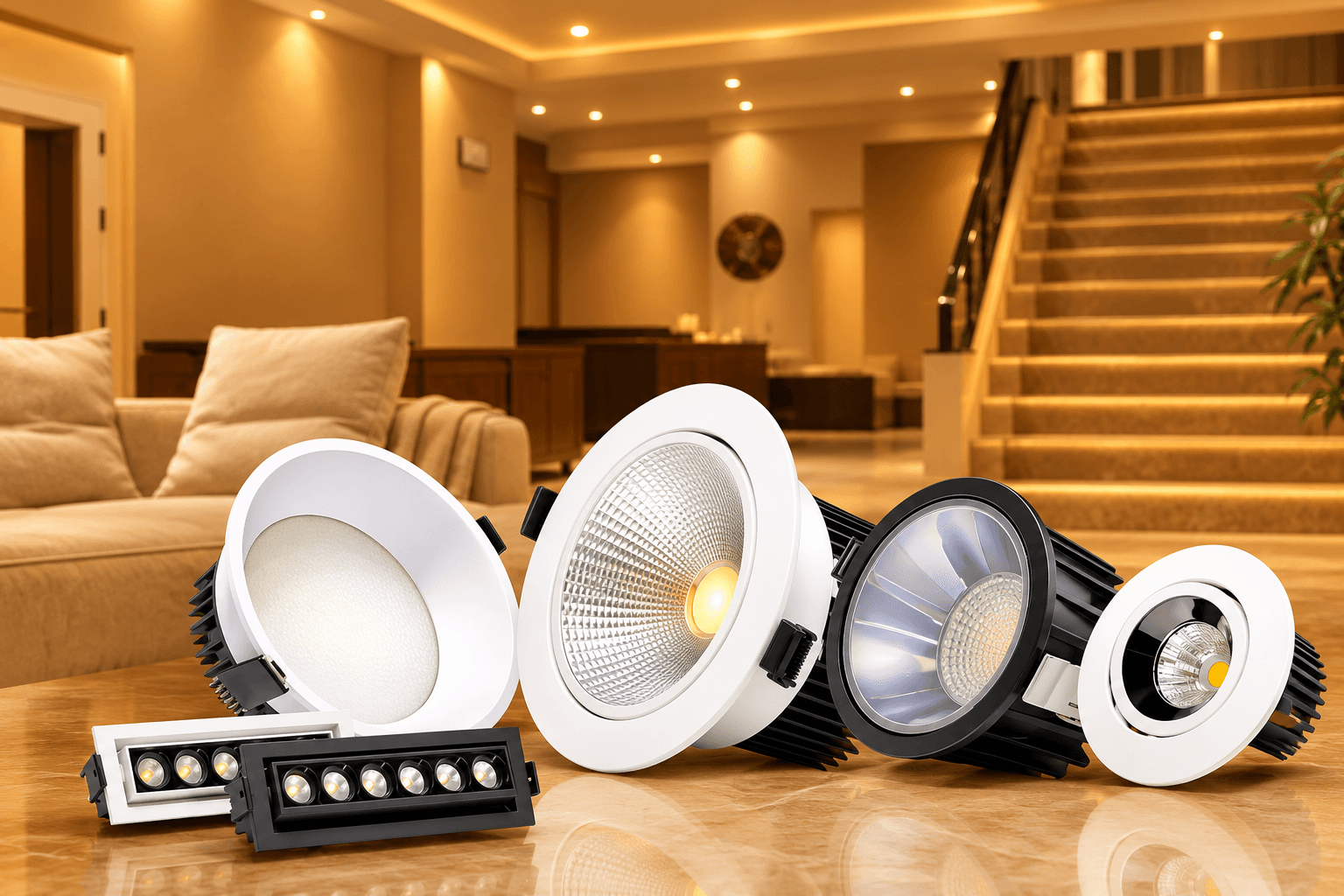
If you want to change colour tone through the day, the 3-in-1 COB downlight offers warm, neutral and cool white in one fixture.
For showrooms and wide halls where fewer ceiling holes are preferred, a 24W multi-head downlight can help, and our blog on 3x8W downlights for large halls explains when it is worth it.
Where These Downlights Work Best
Large open spaces are where a proper body pays off. Showrooms, retail shops, offices, meeting rooms, hotel lobbies and big living rooms all run lights for long hours. Axion Light has handled this kind of work, for example the car showroom lighting project and the corporate office lighting project in Islamabad. For shops, see our ideas on retail shop lighting in Pakistan, and for workspaces read about office lighting for productivity.
Running cost matters too. A 15W downlight uses very little power compared with older fittings, and our post on how much electricity a 12W COB downlight uses shows the monthly cost in PKR so you can scale it for your own room. Prices change, so check the latest on our LED lights price in Pakistan page.
FAQs
1. Why is a die-cast aluminium body better than a plastic body?
Aluminium carries heat away from the chip and driver, while plastic traps it. Cooler parts last longer and keep their brightness and colour. For a high-lumen fixture running many hours a day, this is the biggest factor in lifespan.
2. How many lumens do I need for a large room?
A common starting point is about 15 to 20 lumens per square foot for living areas, and more for showrooms or work areas. Divide the total by the lumens of one light to find the count. A quick layout check helps avoid mistakes.
3. Which wattage should I choose for high ceilings?
For ceilings above roughly 10 to 12 feet, 20W is usually the better choice because the light has further to travel. For standard ceilings in big living rooms, 15W works well. Lower ceilings and corridors are fine with 10W.
4. Does the Axion Light COB downlight need special wiring?
No. It is a recessed fixture with an isolated driver that works on AC 85–265V. Check the cut-out size, leave clearance above the ceiling, and connect as per the instructions. Axion Light can guide you on layout for bigger projects.
Conclusion
For large rooms, brightness alone is not enough. A high lumen COB downlight needs a body that can carry heat away, or it will lose brightness and colour long before its time. A die-cast aluminium body, a proper driver and a wide input range are what turn a bright light into a long-lasting one.
Axion Light offers the COB downlight in 10W, 15W and 20W, so you can match it to your room. If you are planning a hall, showroom or office and want help with wattage or spacing, message the Axion Light team on WhatsApp for a free layout suggestion and bulk pricing.