Swimming Pool Lights in Pakistan | LED & Underwater Pool Lights
By Admin | 8/27/2026
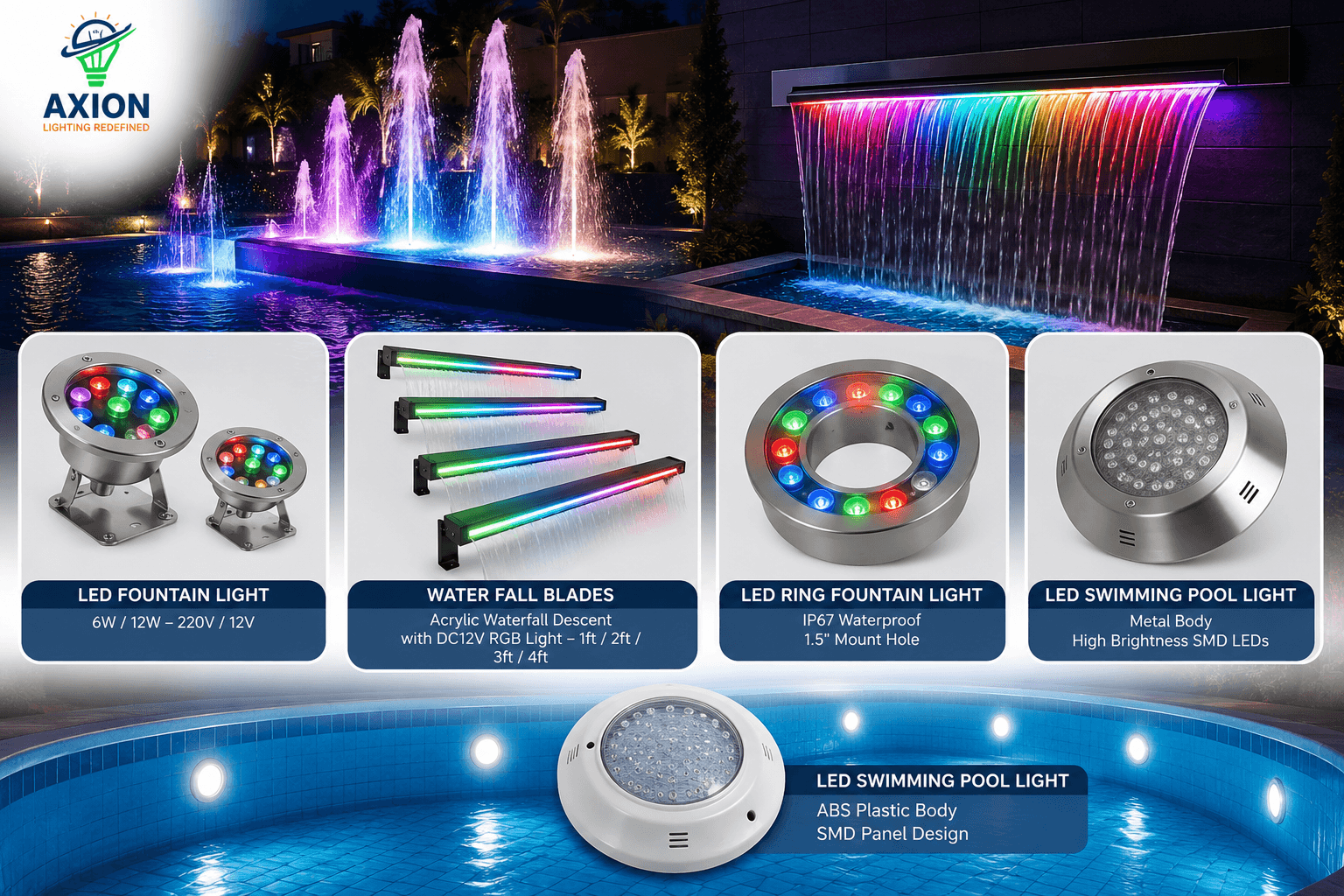
A swimming pool is not only a place for swimming. In modern homes, hotels, farmhouses, restaurants, and commercial spaces, a pool is also an important part of the overall design. The right lighting can completely change how the pool looks at night, improve visibility, and create a more attractive and relaxing environment.
When customers search for Swimming pool lights in Pakistan, they usually want answers to practical questions. Which pool light is best? Should they choose white or RGB lighting? Are LED pool lights waterproof? What wattage is suitable? How long do they last, and how can they be installed safely?
This guide answers these questions in a simple and practical way. Whether you are building a new pool or upgrading an existing one, Axion Lights offers different lighting solutions to help you choose the right LED pool lights and underwater pool lights according to your pool size, design, and budget.
Why Are Swimming Pool Lights Important?
Pool lighting provides much more than decoration. A properly illuminated pool improves nighttime visibility and makes the surrounding area look more welcoming. It can also highlight the shape, depth, tiles, fountains, and architectural features of the pool.
Modern LED technology has made pool lighting more energy-efficient and versatile. Instead of using traditional lights that consume more electricity and may require frequent replacement, LED lights can provide bright illumination with lower power consumption and longer operating life.
For homeowners, lighting can turn a simple swimming pool into a relaxing outdoor space. For hotels and commercial properties, attractive pool lighting can improve the overall appearance of the property and create a better experience for guests.
At Axion Lights, customers can explore swimming pool lights suitable for different types of residential and commercial water features.
Types of Swimming Pool Lights
There are several types of pool lighting available, and the right option depends on the pool design and the effect you want to achieve.
LED Pool Lights
LED pool lights are among the most popular options because they are energy-efficient, bright, and available in different colors and designs. They can be installed in residential pools, hotel pools, fountains, and other water features.
White LED pool lights are suitable for customers who want a clean and modern appearance. RGB LED lights are better for those who want multiple colors and dynamic lighting effects.
Many customers searching for LED pool lights in Pakistan prefer LED technology because of its lower energy consumption and longer lifespan compared with older lighting options.
Underwater Pool Lights
Underwater pool lights are specially designed for installation below the water level. These lights require proper waterproof protection and suitable installation to perform safely in a pool environment.
They are commonly installed along the pool walls to distribute light across the water. Depending on the design, multiple lights may be used to reduce dark areas and create balanced illumination.
The quality of waterproofing is one of the most important factors when choosing underwater lighting. Always check the product specifications and make sure the light is designed specifically for underwater or pool use.
RGB Pool Lights
RGB pool lights can produce multiple colors and are ideal for customers who want a more decorative or premium appearance. Depending on the system, colors and lighting effects may be controlled through a remote, controller, or compatible smart control system.
These lights are particularly popular for:
Luxury residential pools
Hotels and resorts
Farmhouses
Event spaces
Decorative fountains
Outdoor entertainment areas
With the right RGB pool lighting, the same swimming pool can have a calm blue appearance one day and a colorful atmosphere for an event the next.
LED Pool Lights vs Traditional Pool Lights
The following table gives a simple comparison between modern LED lighting and standard traditional pool lighting.
Feature | LED Pool Lights | Traditional Pool Lights |
Energy consumption | Generally lower | Generally higher |
Lifespan | Usually longer | Usually shorter |
Color options | White, RGB and other options | Often limited |
Heat generation | Lower | Higher |
Maintenance needs | Usually lower | May require more frequent replacement |
Lighting control | Can support controllers and smart systems | Usually basic control |
Design flexibility | High | Limited |
For most modern projects, LED lighting provides better flexibility. However, the correct choice still depends on the pool design, electrical system, required brightness, and customer budget.
How to Choose the Right Swimming Pool Light
Before buying a pool light, it is important to understand your requirements. Choosing a light only based on appearance or price may result in poor illumination or compatibility problems later.
Consider the Pool Size and Shape
A small residential pool does not require the same lighting arrangement as a large hotel or commercial pool. The number of lights, beam distribution, and placement should be planned according to the dimensions and shape of the pool.
Long pools may require multiple lights placed strategically to avoid dark sections. Pools with curves, steps, or separate shallow areas may also require additional planning.
Choose Between White and RGB Lighting
White light is ideal for customers who prefer a natural, clean, and elegant appearance. It can make the water look bright and improve nighttime visibility.
RGB lighting is better for customers who want more flexibility and decorative effects. It is especially suitable for pools that are used for parties, events, or entertainment.
A good approach is to first decide the main purpose of the lighting. If your priority is visibility and simplicity, white LED lights may be enough. If you want changing colors and visual effects, consider RGB LED Fountain lights.
Check the Waterproof Rating
Pool lights operate in a wet environment, so waterproof protection is essential. Always review the IP rating and product specifications before installation.
However, the IP rating should not be the only factor considered. Proper installation, sealing, wiring, and compatible electrical components are equally important for long-term performance.
Select the Correct Voltage and Electrical Setup
Pool lighting systems may operate using different electrical configurations. The voltage and installation method should match the product requirements and local electrical safety standards.
This is an area where professional installation is highly recommended. Water and electricity require careful planning, and incorrect installation can create safety risks or damage the lighting system.
How Many Pool Lights Do You Need?
There is no single answer because every pool is different. The required number of lights depends on several factors, including:
Pool length and width
Pool depth
Shape and layout
Light wattage and brightness
Beam angle
Wall and tile color
Desired lighting effect
For example, dark-colored tiles may absorb more light, while lighter tiles can reflect illumination and make the pool appear brighter. A professional lighting plan can help determine the most suitable number and placement of fixtures.
Instead of simply installing more lights, it is usually better to focus on proper placement. Balanced lighting can create a more attractive result while avoiding unnecessary energy consumption.
Where Should Underwater Pool Lights Be Installed?
The placement of underwater pool lights has a major effect on the final appearance of the pool. Lights are commonly installed on the pool walls and positioned to spread illumination across the water.
The exact installation position should consider areas such as steps, shallow sections, corners, and seating areas. The goal is to provide balanced illumination without creating excessive glare.
For larger or custom-designed pools, planning the lighting before construction can make installation easier. However, retrofit lighting options may also be available for existing pools depending on the structure and electrical setup.
At Axion Lights, customers can discuss their pool requirements and select suitable WaterFall Blades based on the project.
What Makes a Good Pool Light?
A good pool light should not only look attractive. It should also be suitable for continuous use in a demanding environment.
Here is a practical comparison of what customers should look for:
Requirement | Standard Product | Quality Pool Lighting Solution |
Water protection | May not be designed for continuous water exposure | Suitable waterproof design for intended use |
Light quality | Uneven or limited output | Balanced and effective illumination |
Energy use | Can consume more power | Energy-efficient LED technology |
Color options | Usually fixed | White, RGB, or controllable options |
Installation compatibility | May have limited options | Selected according to the pool system |
Long-term use | May require frequent replacement | Designed for better operational life |
When comparing products, customers should focus on specifications, compatibility, waterproof construction, and after-sales support instead of choosing only the lowest-priced option.
Swimming Pool Lighting for Homes, Hotels and Commercial Projects
Different projects require different lighting solutions.
For a residential swimming pool, the main priorities may include comfort, appearance, energy efficiency, and easy control. Homeowners may prefer warm or cool white lighting for a simple look or RGB lighting for a more decorative environment.
Hotels and resorts often require lighting that supports the overall architecture and creates an attractive nighttime experience for guests. RGB lighting can be useful for highlighting special areas, while white lighting may provide the primary illumination.
Commercial and public projects may require more detailed planning because pool size, operating hours, maintenance requirements, and safety considerations can be more demanding.
For these projects, working with a supplier such as Axion Lights can help customers compare suitable products and select lighting according to the actual project requirements.
Installation Tips for Swimming Pool Lights
Proper installation is essential for the performance and safety of pool lighting.
First, always confirm that the selected product is suitable for the intended location. Do not use ordinary outdoor lights as a replacement for lights specifically designed for underwater or pool applications.
Second, follow the manufacturer's installation requirements regarding wiring, connections, transformers, controllers, and waterproof sealing.
Third, test the complete system before finalizing the installation where possible. This can help identify connection or control issues early.
Finally, electrical work around water should be handled by a qualified professional. This is particularly important for larger pools and permanent installations.
Maintenance Tips for LED Pool Lights
Although LED lights generally require less maintenance than older lighting technologies, regular inspection can help extend the life of the system.
Check the visible condition of the fixtures and look for signs of damage or water-related issues. Keep the pool and surrounding equipment properly maintained, and inspect electrical connections according to the maintenance requirements of the system.
If an RGB light stops changing colors or becomes less responsive, the issue may be related to the controller, power supply, wiring, or the fixture itself. It is better to diagnose the complete system rather than replacing the light immediately.
For customers looking for replacement or new underwater pool lights, Axion Lights can help identify products suitable for different pool and water-feature applications.
FAQs
1. Which swimming pool light is best in Pakistan?
LED swimming pool lights are a popular choice because they offer good energy efficiency, long operating life, and different color options. The best product depends on your pool size, installation requirements, desired brightness, and whether you prefer white or RGB lighting.
2. Are LED pool lights safe to use underwater?
LED pool lights designed specifically for underwater or swimming pool use can be used when installed correctly according to their specifications. Proper waterproofing, compatible electrical components, and professional installation are essential for safety and reliable performance.
3. Should I choose white or RGB pool lights?
White lights are ideal for clean, bright, and simple pool illumination. RGB lights are better if you want multiple colors and decorative effects. Some customers use white lighting for general illumination and RGB lighting to create a more premium atmosphere.
4. How many lights are required for a swimming pool?
The number depends on the pool's size, shape, depth, tile color, and the brightness of each fixture. A larger pool generally requires multiple strategically placed lights to achieve balanced illumination and reduce dark areas.
5. How long do LED pool lights last?
The lifespan depends on product quality, usage, installation conditions, and maintenance. LED technology generally offers a longer operating life than many traditional lighting options, but actual performance varies between products and operating environments.
Conclusion
Choosing the right swimming pool lights in Pakistan can improve the appearance, functionality, and nighttime experience of any pool. From simple white LED pool lights to colorful RGB underwater pool lights, there are options available for homes, hotels, resorts, farmhouses, and commercial projects.
Before making a purchase, consider the pool size, required brightness, color preference, waterproof design, voltage requirements, and installation method. A well-planned lighting system can provide balanced illumination while complementing the overall design of the space.
If you are planning a new pool or upgrading an existing one, explore Swimming Pool Lights, LED Pool Lights, Underwater Pool Lights, and other related lighting solutions from Axion Lights. Choosing the right product for your specific project can help you create a safer, more attractive, and energy-efficient pool environment.