Fiber Optic vs LED Ceiling Lights: Which Is Better for a Star Ceiling?
By Admin | 11/26/2026
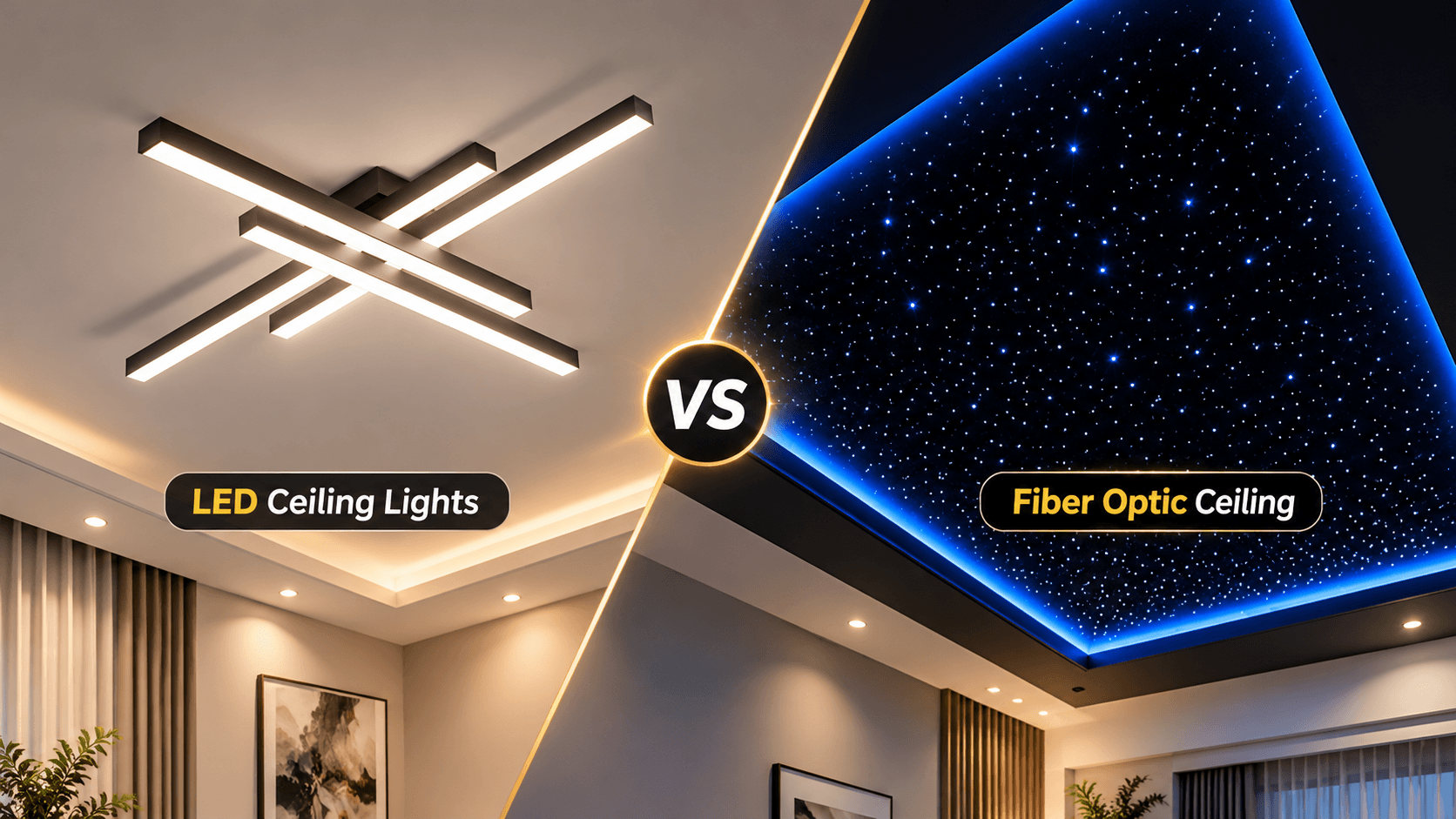
Planning a star ceiling and stuck between fiber optic and LED ceiling lights? You are not alone. Most customers who visit Axion Light in Islamabad and Rawalpindi ask the same thing before they start: will it really look like a night sky, and what will it cost to run and maintain? The short answer is simple. For a true twinkling star effect, fiber optic wins. For everyday room brightness, LED wins. The smartest homes use both. This guide explains the difference in plain language, so you can decide with confidence.
What Makes a Star Ceiling Look Real?
A real night sky is made of tiny, sharp pinpoints of light with different brightness levels, scattered unevenly. That is exactly where the two technologies separate.
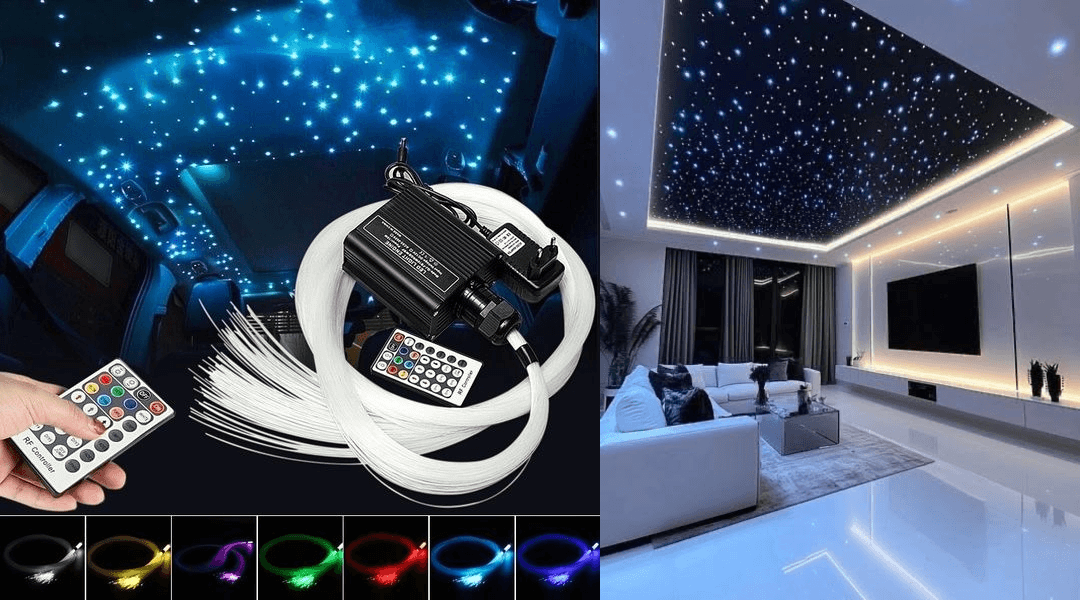
A fiber optic star ceiling uses hundreds of hair-thin strands connected to one central light source, called a light engine. Each strand ends in a tiny point flush with the ceiling surface, so you see a glowing dot rather than a bulb. Because strands come in different thicknesses, some stars look bright and some look faint, which is what makes the sky feel natural. Add a twinkle wheel and the stars slowly shimmer.
Standard LED ceiling lights work differently. Each LED is a real electrical component, so it needs its own wiring, its own hole and enough space behind the ceiling. A single LED spot is also physically larger than a fiber tip, so it looks like a small lamp, not a distant star. You can place many of them, but the effect is closer to a dotted ceiling than a sky.
This is why interior designers across Pakistan choose fiber optics when the goal is atmosphere, and LED when the goal is visibility.
Fiber Optic vs LED Ceiling Lights: Key Differences
Here is a side-by-side comparison of an Axion Light fiber optic star ceiling and a standard LED ceiling setup.
Feature | Axion Light Fiber Optic Star Ceiling | Standard LED Ceiling Lights |
Star effect | Realistic pinpoint stars with varied brightness | Visible lamp dots, not true stars |
Light source | One central engine, strands carry the light | Separate LED in every fitting |
Heat at the ceiling | Strand tips stay cool | Each fitting produces some heat |
Electrical points | Only the engine is powered | Every fitting is wired |
Twinkle and colour change | Available with twinkle wheel and RGBW engines | Limited or needs extra controllers |
Room brightness | Mood and accent lighting only | Full task and general lighting |
Ceiling holes | Tiny, almost invisible | Larger cut-outs needed |
Best use | Bedrooms, lounges, home theaters, kids rooms | Living areas, kitchens, offices |
The table shows the real story. Fiber optic is a mood product. LED is a workhorse product. Comparing them as if they do the same job is where most buyers go wrong.
Why Fiber Optic Is Better for a Star Ceiling
The first reason is looks. Nothing else gives that soft, far-away sparkle. Our star ceiling lights are sold as fiber rolls, so you can choose the length and density of stars to suit your ceiling size.
The second reason is safety. The light is generated inside the engine, and the strands only carry it. There is no electricity in the strand itself and the tip stays cool, which makes it a comfortable choice for children's rooms and low ceilings.
The third reason is easy upkeep. If something ever needs attention, you service one engine instead of opening the ceiling to find a faulty fitting. Our fiber optic light engine is available in single head and double head versions, so a small bedroom and a large lounge can both be covered properly.
You can see how this looks in real homes in our star ceiling project in Swabi and our luxury residence in G-11, Islamabad.
When LED Ceiling Lights Are the Better Choice
Fiber optic stars are beautiful, but you cannot read a book, cook dinner or work at a desk under them. That is a job for LED.
Good LED downlights give clean, even light for walking around, cleaning and daily tasks. If you want to understand wattage, beam angle and colour rendering before buying, read our COB LED downlights guide.
The best star ceiling setup is a combination. Use fiber optic for the sky effect and a few warm LED downlights for practical light. Then connect the LEDs to a dimmer so you can drop the room lights and let the stars take over in the evening. Our home theater project in Islamabad uses this exact idea.
If you are looking at the budget side of LED, our LED ceiling lights price guide breaks down what you should expect to pay in Pakistan this year.
Cost, Installation and Lifespan
Fiber optic usually costs more at the start than a few plain LED spots, because you are paying for the engine, the strands and the labour of placing each star by hand. But the comparison is not fair if you look only at the first bill. To create a star effect with LEDs, you would need dozens of small fittings, each with wiring and cut-outs, and it still would not look like stars.
Price depends on ceiling area, number of stars, engine power and extra features like twinkle or colour change. We explain every factor in our fiber optic lighting cost guide, so you can plan before you ask for a quote.
Installation is best done before the ceiling is closed. The strands are threaded through the ceiling board or fabric and cut flush. If your ceiling is already built, a tretch ceiling is a smart base, because the strands can be placed behind the fabric and the stars appear to glow through it. Read the stretch ceiling price in Pakistan guide if you are considering this route.
For lifespan, both technologies are long lasting when the driver and engine are of good quality. The strands themselves have no filament to burn out. In practice, the engine is the only part that may need replacing after many years of use.
Which One Should You Choose?
Choose fiber optic if you want a real night sky, a calm bedroom, a cinema feel or a child-friendly ceiling. Choose LED if your main need is brightness and low running cost for everyday living. Choose both if you want a ceiling that works in daytime and feels magical at night.
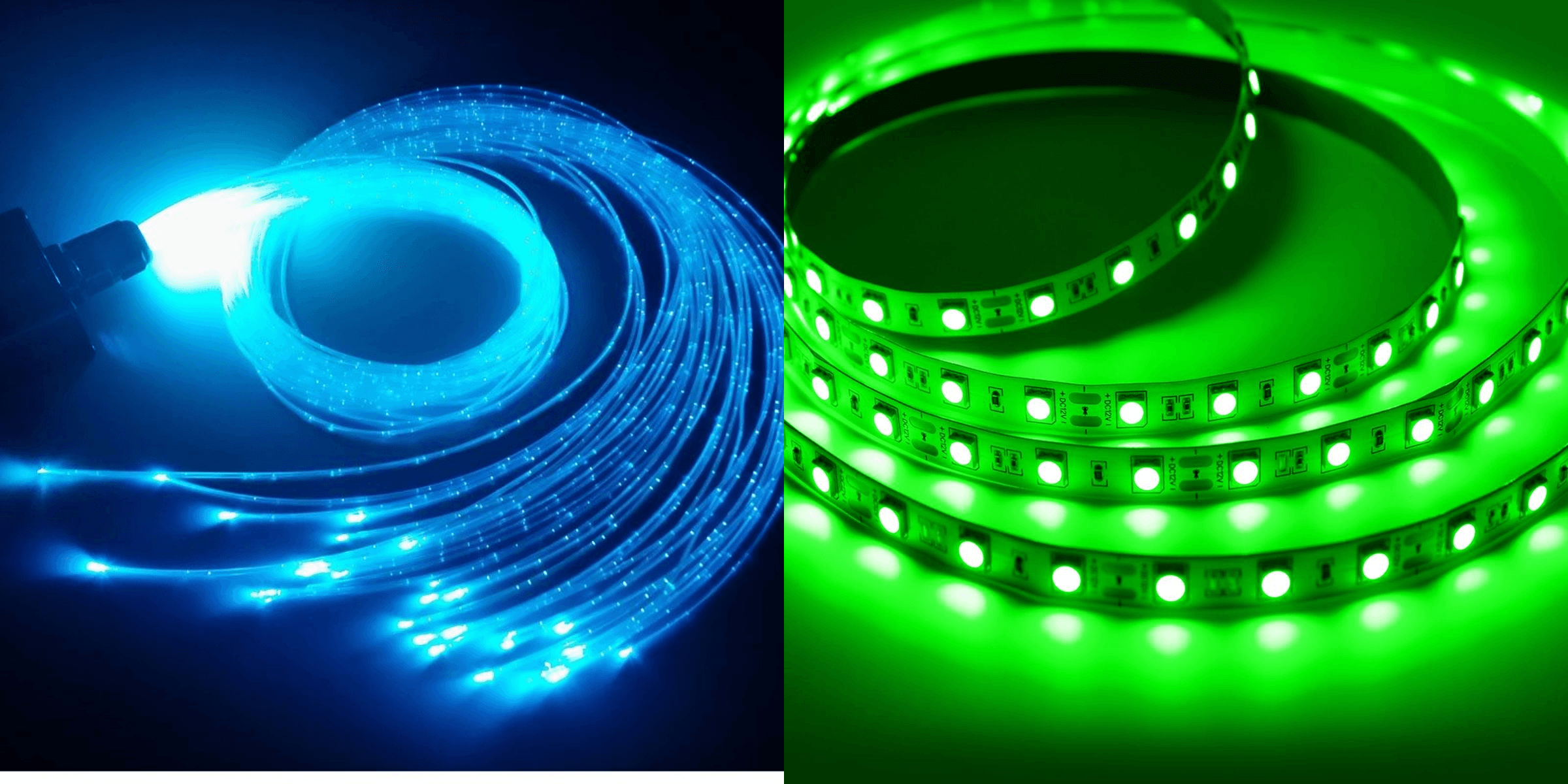
If you want to compare fiber optic with other decorative options, our article on fiber optic vs LED strip lights is a helpful next read. For bedroom planning, see our bedroom ceiling lights guide.
FAQs
Can I use LED lights to make a star ceiling? Yes, but the result looks like small spotlights, not real stars. LEDs are larger and need individual wiring. For a soft, realistic sky, fiber optic strands give a far better and more natural effect.
Is a fiber optic star ceiling safe for bedrooms and kids rooms? Yes. The light is made inside the engine and the strands only carry it, so the tips stay cool and carry no electric current. This makes it a comfortable option for bedrooms and children's rooms.
Does a fiber optic star ceiling use a lot of electricity? No. A single engine powers hundreds of stars, so power use is low. It is mood lighting, so you will not run it as long as your main room lights, which keeps your bill small.
Can I install a star ceiling in an existing ceiling? It is possible, but easiest before the ceiling is finished. In a finished room, a stretch ceiling or a new false ceiling layer is the usual solution. Our team can check your space and suggest the best method.
Conclusion
So, which is better for a star ceiling: fiber optic or LED? For the star effect itself, fiber optic is the clear winner. It is cooler, safer, easier to service and looks like a real sky. LED ceiling lights are still essential for brightness, so the best answer is to use fiber optic for atmosphere and LED for daily light. Axion Light supplies fiber optic engines, star ceiling rolls, LED downlights and dimmers, and our team can plan the full layout for your home. Message us today with your ceiling size and we will help you design the right star ceiling for your budget.