Silicone LED Profiles: Sizes, Uses & Installation Guide
By Admin | 9/11/2026
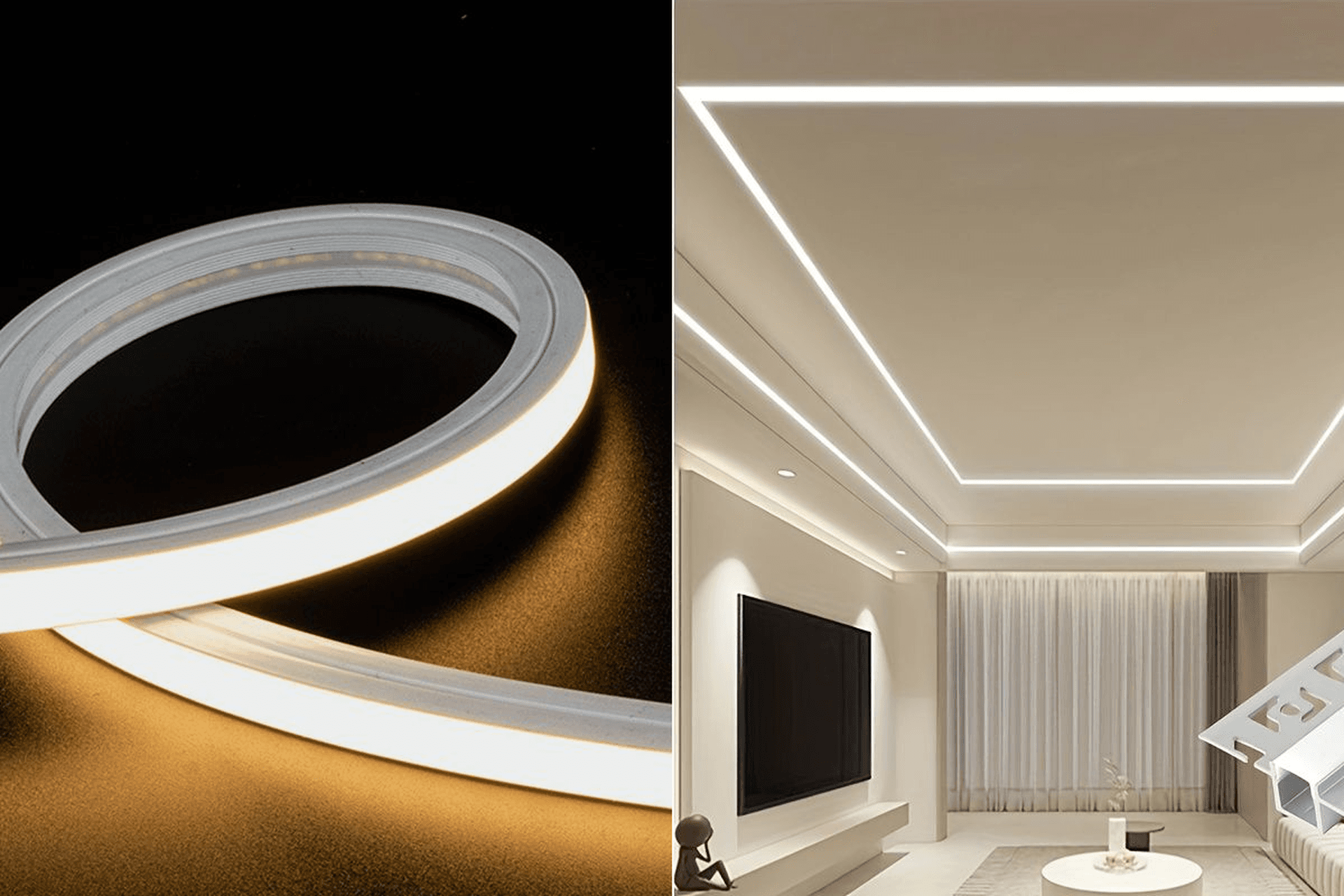
Silicone LED profiles are becoming a popular choice for modern lighting because they create a clean, continuous and professional appearance that ordinary exposed LED strips cannot achieve. Instead of seeing individual LED points, a suitable silicone profile helps diffuse the light and gives the installation a smoother, more refined look.
Whether you are designing a home ceiling, office, retail store, hotel, restaurant or outdoor feature, choosing the right silicone LED profile depends on the size of the LED strip, available installation space, required brightness and the final appearance you want.
At Axion Lights, silicone profiles can be used with LED strip lighting for customized architectural applications, including ceiling details, linear lighting, furniture, walls and decorative installations. This guide explains the common sizes, where they are used, how installation works and what you should consider before purchasing.
What Is a Silicone LED Profile?
A silicone LED profile is a flexible or semi-flexible lighting channel designed to house an LED strip. Unlike conventional aluminium channels with rigid diffusers, silicone profiles can provide a continuous illuminated surface and can be used for certain straight, curved or customized lighting designs.
The profile protects the LED strip from direct contact, improves the appearance of the installation and helps diffuse light. Depending on the profile design and LED strip used, it can be installed into ceilings, grooves, walls, cabinets, furniture and other architectural elements.
For customers looking for LED strip lights in Pakistan, the profile is an important part of the complete lighting system rather than simply an accessory. The LED strip, profile size, power supply and installation method all affect the final result.
Common Silicone LED Profile Sizes
There is no single silicone profile size that works for every project. The correct size should be selected according to the LED strip and the space where it will be installed.
Some commonly used sizes include:
Silicone Profile Size | Typical Application | Best For |
Compact grooves and decorative lighting | Cabinets, shelves, small ceiling details | |
General architectural lighting | Ceilings, walls, furniture | |
Wider and more visible lighting | Cove lighting, feature walls, linear designs | |
Larger continuous lighting applications | Architectural features and prominent linear lighting | |
Customized profiles | Project-specific applications | Curves, special grooves and customized designs |
The dimensions above are examples of commonly used profile formats. The actual internal space must always be checked against the LED strip width and installation requirements before ordering.
For a professional result, customers should not select a profile simply because the external dimensions look suitable. The internal channel needs enough space for the selected strip and wiring, while the diffuser should be positioned correctly to achieve the desired light distribution.
Axion Lights' silicone LED profiles can be considered when a project requires a clean linear appearance and customized architectural lighting.
How to Choose the Right Silicone LED Profile
The first question should be: What LED strip are you installing?
LED strips are available in different widths, voltages, densities and technologies. A narrow strip may fit comfortably inside a compact profile, while a higher-density or wider strip may require a larger channel.
The second consideration is the visual effect. If you want a subtle line of light in a cabinet or shelf, a compact profile may be sufficient. For a ceiling cove or architectural feature where the lighting itself becomes a design element, a wider profile may provide a better appearance.
You should also consider the installation surface. A profile installed inside a gypsum ceiling groove may require different dimensions from one installed on furniture or a wall.
Finally, consider heat management. LED strips produce heat, particularly higher-power strips. Some applications may benefit from an aluminium-based heat-dissipation solution or a profile system specifically designed for the selected LED strip. Ask your lighting supplier to confirm compatibility instead of assuming that every strip can be installed in every silicone profile.
Silicone LED Profile vs Standard Exposed LED Strip
One of the main reasons customers choose a silicone profile is appearance. An exposed LED strip can show individual LED points, especially when viewed directly. A diffuser helps produce a more continuous and comfortable lighting effect.
Feature | Exposed LED Strip | Silicone LED Profile |
Appearance | Individual LED points may be visible | Smoother, more continuous appearance |
Protection | Limited | Better physical protection |
Finish | Basic/decorative | Clean architectural finish |
Installation | Simple | Requires profile preparation |
Design flexibility | High | High, depending on profile |
Professional appearance | Moderate | More refined |
Custom applications | Possible | Suitable for many architectural designs |
The best option depends on the project. If the strip is hidden inside a cabinet, an exposed strip may be acceptable. If the lighting is directly visible, a silicone profile can provide a much cleaner result.
For customers planning modern LED ceiling lighting, integrating the profile into the architecture can make the lighting appear like part of the ceiling rather than an added fixture.
Where Are Silicone LED Profiles Used?
Silicone profiles are particularly useful when the customer wants lighting to blend into the architecture.
Ceiling and Cove Lighting
Ceiling applications are among the most popular uses. A profile can be placed inside a prepared groove or architectural detail to create a continuous line of light.
For homes, this can be used around bedrooms, living rooms, TV walls and decorative ceilings. In commercial spaces, linear lighting can emphasize reception desks, corridors and feature ceilings.
If you are planning LED ceiling lights for modern interiors, combining a profile with the right LED strip can create a more customized appearance than using only conventional ceiling fixtures.
Walls and Feature Areas
Silicone LED profiles can be installed in wall grooves to create vertical or horizontal lines. They can also be incorporated into feature walls, display areas and decorative architectural elements.
This is useful for hotels, restaurants, retail stores and offices where lighting is part of the interior design.
Furniture and Cabinets
Smaller profile sizes can be useful for furniture, shelves, wardrobes and cabinets. They can provide practical illumination while maintaining a clean appearance.
For example, a concealed LED strip inside a wardrobe can provide functional lighting without making the individual LEDs the main visual element.
Commercial and Retail Spaces
Retail stores can use linear lighting to highlight shelves, counters, product displays and architectural details. Restaurants can use it under counters or around decorative structures.
For larger projects, commercial lighting solutions by Axion Lights can combine linear profiles with other LED products to create a coordinated lighting scheme.
Decorative and Architectural Lighting
Silicone profiles are also useful when lighting needs to follow a specific design. Depending on the selected profile, they may be suitable for curved or customized applications where rigid channels would be difficult to use.
This makes them particularly interesting for contemporary interior designs where straight lines, curves and concealed illumination are important.
Silicone LED Profile Installation Guide
Correct installation makes a major difference to the final appearance. Even a high-quality profile can look uneven if the groove, strip or wiring is poorly installed.
1. Measure the installation area
Start by measuring the exact length of the lighting run. Consider corners, connections, power-feed points and any areas where the profile needs to be cut.
Avoid measuring only once. For large installations, small measurement errors can become noticeable when multiple sections need to align.
2. Select the correct profile
Check the internal dimensions of the profile against your LED strip. Make sure the strip fits properly without being excessively compressed.
For customized projects, confirm the dimensions with the lighting supplier before cutting materials.
3. Prepare the surface or groove
The installation area should be clean, dry and free from dust. If the profile is being recessed into a ceiling or wall, the groove should be prepared accurately according to the profile dimensions.
An uneven groove can result in an uneven light line.
4. Prepare the LED strip
Cut the LED strip only at its designated cutting points. Never cut randomly between electrical sections.
If you are using a 12V or 24V LED strip, make sure the power supply and wiring are compatible with the strip specifications.
5. Install the strip inside the profile
Position the LED strip evenly inside the silicone channel. Avoid sharp bends or excessive pressure that could damage the strip.
For longer installations, plan power injection and cable routing appropriately rather than relying on a single connection point for the entire run.
6. Position the profile
Place the profile into its prepared groove or mounting location. Make sure it remains straight and properly aligned throughout the installation.
For visible architectural lighting, alignment is especially important because even a small deviation can be noticeable.
7. Connect and test the lighting
Before permanently completing the installation, connect the LED strip to the appropriate power supply and test the entire section.
Check for flickering, dark sections, uneven brightness and loose connections. Testing before finishing the ceiling or wall saves considerable time later.
8. Complete the finishing
Once the lighting works correctly, complete the surrounding surface and ensure the profile sits neatly within the architectural detail.
The final objective should be a clean line of illumination without visible gaps, exposed wiring or uneven sections.
Important Things to Check Before Buying
Before ordering a silicone LED profile, customers should provide the supplier with as much project information as possible.
Tell your lighting provider:
LED strip width
LED strip voltage
Required profile length
Installation location
Recessed or surface application
Straight or curved requirement
Desired light color
Indoor or outdoor environment
Approximate brightness requirement
Power supply location
This information allows the supplier to recommend a more suitable combination rather than selling a profile without considering the complete installation.
If you are working on a larger lighting project, Axion Lights' lighting design services can also help you select suitable products according to the project's architectural requirements.
Why Choose Silicone Profiles for Modern Lighting?
Modern customers increasingly want lighting that looks integrated rather than installed as an afterthought. Silicone LED profiles help achieve this by turning an LED strip into a more visually refined linear lighting element.
They are particularly useful for designers, architects, homeowners and contractors who want flexibility in creating custom lighting details.
For Pakistan's growing residential and commercial lighting market, this can be valuable in projects ranging from homes and offices to restaurants, hotels and retail spaces. The important point is to select the profile according to the actual strip and installation conditions.
Axion Lights provides lighting products for customized projects where design, functionality and installation requirements need to work together. Instead of choosing a profile based only on appearance, customers should consider the entire lighting system and intended application.
FAQs
1. What is the best size of silicone LED profile?
There is no universal best size. The correct size depends on the width of the LED strip, installation location and desired lighting effect. Compact profiles can work well for cabinets and small grooves, while larger profiles are more suitable for prominent architectural lighting.
2. Can silicone LED profiles be used for ceiling lighting?
Yes, silicone profiles can be used for many ceiling lighting applications, including grooves, cove lighting and decorative linear designs. The profile dimensions should match the available ceiling space and LED strip. Proper alignment is important to achieve an even, professional-looking light line.
3. Can I install a 24V LED strip in a silicone profile?
Yes, a compatible 24V LED strip can be installed in a suitable silicone profile. However, the profile must have adequate internal dimensions for the strip, and the power supply must match the strip's voltage and wattage requirements. Always check compatibility before installation.
4. Are silicone LED profiles better than exposed LED strips?
They can be better when appearance, protection and light diffusion are priorities. A silicone profile can hide individual LED points and create a cleaner linear appearance. However, an exposed strip may be more practical for concealed locations where the strip itself cannot be seen.
5. Can silicone LED profiles be customized for projects?
Depending on the profile type, customized lengths and project-specific configurations may be possible. Curved, recessed and architectural applications should be discussed with the lighting supplier before production or installation. Axion Lights can help customers identify suitable profile options for customized lighting requirements.
6. Can silicone LED profiles be used outdoors?
Some silicone profiles and LED strips are designed for environments where greater protection is required, but not every profile is automatically suitable for outdoor use. Outdoor installations should be checked for the appropriate IP rating, materials, connections and power supply protection.
7. How do I prevent dark spots in a silicone LED profile?
Dark spots can occur when the LED strip, profile depth and diffuser are not properly matched. Using an appropriate LED density and profile size can help create more uniform illumination. The strip should also be installed evenly without unnecessary gaps or bends.
8. Do silicone LED profiles require a special power supply?
The profile itself normally does not determine the power supply. The power supply is selected according to the LED strip's voltage and total wattage. For example, a 12V strip requires a compatible 12V supply, while a 24V strip requires a 24V supply with sufficient capacity.
Conclusion
Silicone LED profiles are a practical solution for customers who want clean, continuous and modern linear lighting. From ceiling grooves and feature walls to cabinets, furniture, retail displays and architectural installations, the right profile can significantly improve the appearance of an LED strip.
The most important decision is not simply choosing a profile based on its external size. You should consider the LED strip width, voltage, brightness, installation location, required light diffusion and environmental conditions.
Whether you are upgrading a home, designing a commercial interior or planning a customized architectural lighting project, Axion Lights can be a useful source for LED strips, silicone profiles and other lighting solutions. Selecting the right combination before installation helps deliver lighting that is both visually attractive and practical for long-term use.