
12 Landscape Lighting Ideas to Transform Your Outdoor Space with Axion Lights
By Admin | 8/7/2026
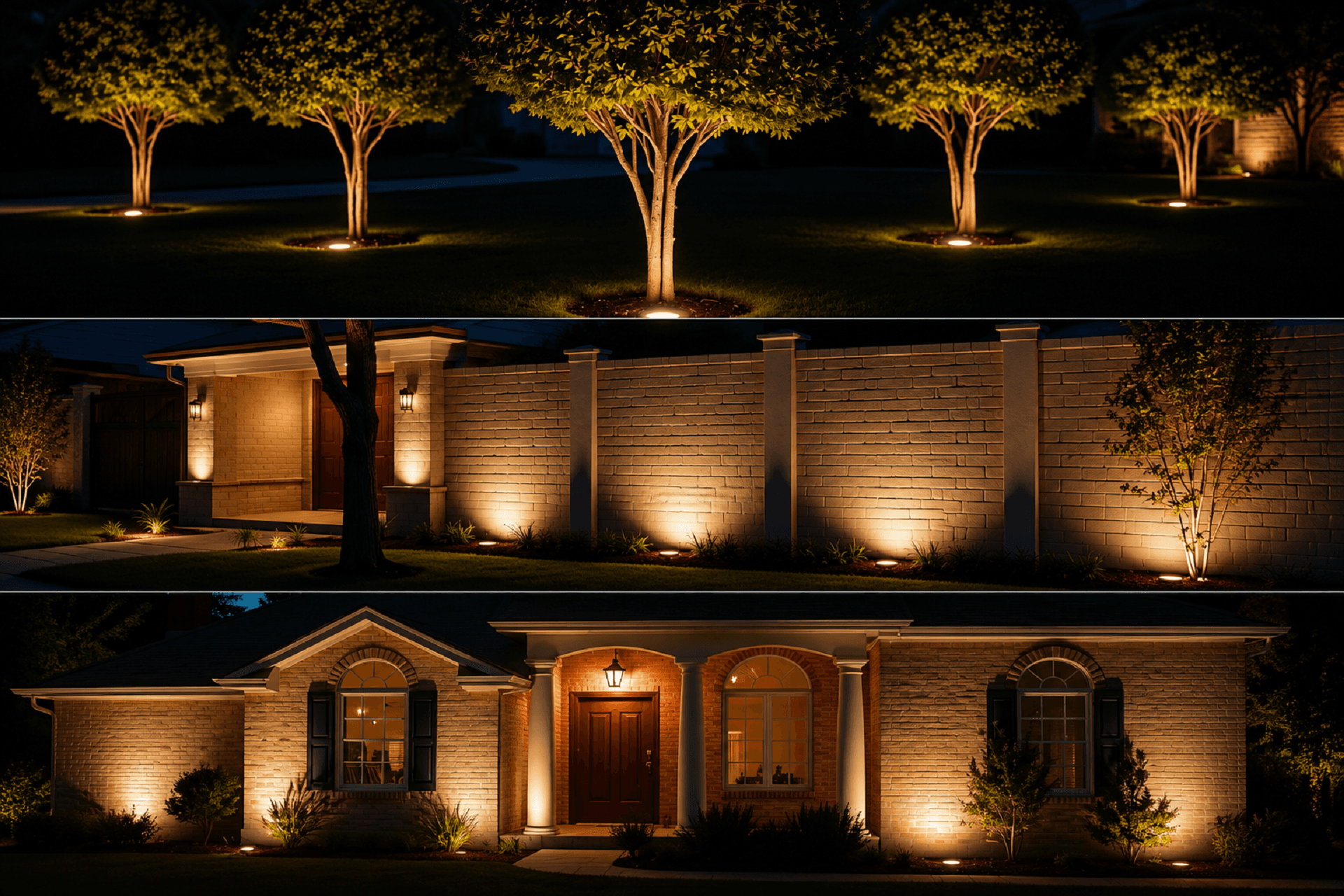
Outdoor spaces look completely different after sunset when the right lighting is used. A well-planned lighting setup can highlight trees, illuminate pathways, improve safety, and create a welcoming atmosphere for family gatherings or commercial spaces. However, choosing outdoor lights is not simply about adding as many fixtures as possible. The right placement, brightness, color temperature, beam angle, and weather resistance all matter.
At Axion Lights, we help customers choose practical and attractive lighting solutions for homes, gardens, hotels, offices, restaurants, and other outdoor environments. Whether you want subtle garden illumination or a dramatic landscape effect, these 12 landscape lighting ideas can help you plan an outdoor space that looks beautiful both day and night.
1. Highlight Trees with Uplighting
Uplighting is one of the easiest ways to make trees and large plants stand out at night. Place an outdoor spotlight or spike light at the base of a tree and direct the beam upward toward the trunk, branches, or leaves.
This technique works particularly well with mature trees because it creates depth and shadows while emphasizing the natural shape of the tree. For a modern appearance, choose a warm white light that creates a comfortable and elegant atmosphere.
For gardens, lawns, and landscaped properties, garden lights can be positioned around trees without making the lighting appear excessive.
2. Illuminate Garden Pathways
Dark pathways can become difficult and potentially unsafe to walk through at night. Pathway lighting provides both practical illumination and visual appeal.
Install small bollard lights, spike lights, or low-level fixtures along walkways leading to entrances, patios, garages, or garden seating areas. Avoid placing extremely bright lights directly in front of people's eyes. Instead, use evenly distributed light that guides people naturally along the path.
For residential properties, pathway lighting is especially useful around driveways, garden entrances, and outdoor steps.
3. Create a Beautiful Lawn with Spike Lights
Spike lights are flexible because they can be installed directly into soil, grass, flower beds, and landscaped areas. Their position can also be changed when your garden design changes.
Use them to highlight decorative plants, statues, trees, walls, or architectural features. A combination of warm white and carefully positioned beam angles can create a premium appearance without requiring dozens of fixtures.
Axion Lights offers outdoor lighting options suitable for different landscape applications, allowing homeowners and designers to create lighting arrangements based on the size and layout of the property.
4. Add Lighting Around Outdoor Seating Areas
If you regularly use your lawn, terrace, patio, or garden for evening gatherings, lighting should make the space comfortable rather than overly bright.
Install soft lighting around seating areas and combine it with decorative fixtures or indirect illumination. Wall lights, recessed fixtures, pendant lights, and carefully positioned landscape lights can work together to create a relaxing environment.
For restaurants, hotels, and outdoor event spaces, layered outdoor lighting in Pakistan can also help create a more inviting customer experience.
5. Highlight Walls and Architectural Features
Landscape lighting does not have to focus only on plants. Exterior walls, columns, textured surfaces, gates, and building facades can become attractive focal points after dark.
Use wall-washing techniques to distribute light across a surface or use narrow-beam spotlights to emphasize specific architectural details. Textured walls are particularly effective because light creates shadows that make their surface more noticeable.
This approach is ideal for modern houses, hotels, offices, restaurants, and commercial buildings where exterior appearance is important.
6. Light Up Water Features and Pools
Water reflects light naturally, making fountains, ponds, swimming pools, and other water features excellent locations for landscape lighting.
Underwater or suitable water-resistant fixtures can create attractive reflections and add depth to the outdoor environment. However, lighting around water requires careful consideration of electrical safety, IP protection, installation methods, and professional wiring.
If you are planning pool illumination, selecting the correct LED swimming pool lights and installation accessories is essential rather than using standard indoor fixtures.
7. Use Warm White for a Relaxing Garden
Color temperature can dramatically change the appearance of an outdoor area. Warm white lighting is generally a popular choice for residential gardens because it creates a comfortable and relaxing atmosphere.
It works particularly well around:
Trees and plants
Seating areas
Pathways
Outdoor dining spaces
Garden walls
Decorative landscaping
For modern commercial environments, neutral or cooler lighting may be more suitable. The ideal choice depends on the architecture, landscaping, and purpose of the space.
8. Add Accent Lighting to Plants and Flower Beds
Flower beds often disappear into darkness after sunset. Small accent lights can bring attention back to colorful flowers, shrubs, and decorative plants.
Instead of lighting every plant individually, select a few important areas and create focal points. This produces a more natural appearance and can reduce electricity consumption.
Use adjustable fixtures so the beam can be directed toward the plants as they grow. This also makes maintenance easier because you can reposition the light without completely changing the installation.
9. Illuminate Driveways and Entrances
Driveway and entrance lighting improves visibility while giving the property a more polished appearance. Lights can be installed along driveway edges, near gates, beside garage entrances, or around front doors.
For larger properties, bollard lights can create a consistent line of illumination. For smaller driveways, compact spike lights or wall-mounted fixtures may be more appropriate.
The goal should be to create sufficient visibility without producing unnecessary glare for drivers or pedestrians.
10. Combine Different Lighting Layers
One of the biggest landscape lighting mistakes is relying on one type of light for the entire outdoor area. A better approach is to combine several lighting techniques.
For example, a residential garden could use:
Outdoor Area | Recommended Lighting | Main Purpose |
Pathways | Bollard or low-level lights | Safety and guidance |
Trees | Spike/spotlights | Highlight landscaping |
Walls | Wall-washing lights | Architectural effect |
Seating | Soft decorative lighting | Comfort |
Driveway | Exterior or spike lights | Visibility |
Pool | Suitable waterproof fixtures | Ambience and safety |
This layered approach gives the outdoor space more depth and prevents it from looking flat or excessively bright.
11. Choose Weather-Resistant LED Lights
Outdoor lighting is exposed to rain, dust, humidity, heat, and temperature changes. Therefore, selecting fixtures designed specifically for outdoor use is important.
Check the fixture's IP rating before purchasing. A higher IP rating generally provides better protection against dust and water, although the correct rating depends on where the fixture will be installed.
LED technology is also a practical choice because it can provide efficient illumination with lower energy consumption than many traditional lighting technologies. When selecting LED outdoor lights, always consider the environment, installation location, wattage, beam angle, and expected operating hours.
12. Create a Smart and Energy-Efficient Landscape
Modern landscape lighting can be more convenient when combined with timers, sensors, controllers, or smart lighting systems. Instead of leaving outdoor lights running throughout the night, you can schedule when they switch on and off.
Motion sensors can be useful around entrances and pathways, while timers can automatically control garden lighting according to your preferred schedule.
For larger projects, professional lighting controls can allow different areas to operate independently. For example, pathway lights can remain active longer while decorative garden lights switch off earlier.
Traditional Outdoor Lighting vs LED Landscape Lighting
Feature | Traditional Lighting | LED Landscape Lighting |
Energy use | Generally higher | Generally lower |
Lifespan | Often shorter | Generally longer |
Maintenance | More frequent in many applications | Usually lower |
Design options | Limited in some fixtures | Wide range of styles |
Switching | Standard controls | Compatible with smart controls |
Outdoor applications | Available | Extensive options |
How to Choose the Right Landscape Lighting for Your Property
Before purchasing landscape lights, think about what you actually want to achieve. A homeowner looking for security lighting will have different requirements from someone designing a decorative garden.
Start by identifying important areas such as pathways, entrances, trees, patios, water features, and architectural elements. Then decide which areas need functional lighting and which only need accent lighting.
You should also consider the size of the area, required brightness, beam angle, color temperature, IP rating, fixture design, installation method, and electricity consumption.
At Axion Lights, customers can explore different lighting solutions according to their project requirements instead of choosing fixtures based only on appearance. For larger residential or commercial projects, discussing the layout with a lighting professional can help avoid excessive fixtures, poor illumination, and unnecessary installation costs.
Why Choose Axion Lights for Landscape Lighting?
Axion Lights provides lighting solutions designed for residential, commercial, architectural, and outdoor applications. The focus is not only on the appearance of a fixture but also on selecting suitable lighting for the environment and application.
Whether you are upgrading a home garden, designing a hotel landscape, illuminating a commercial property, or creating an attractive outdoor entertainment area, Axion Lights can help you select suitable products for your requirements.
A properly designed lighting system can also complement other solutions such as LED ceiling lights, architectural lighting, and decorative lighting used inside the property, creating a consistent overall lighting concept.
FAQs
1. What is the best lighting for landscape areas?
LED spotlights, spike lights, bollard lights, pathway lights, and suitable waterproof fixtures are commonly used for landscape lighting. The best option depends on whether you need accent lighting, pathway illumination, security, or decorative effects.
2. What color light is best for garden landscaping?
Warm white is usually a popular choice for gardens because it creates a comfortable and natural-looking atmosphere. Neutral white can work better for modern commercial landscapes where brighter and cleaner illumination is preferred.
3. How many landscape lights do I need?
The number depends on the property's size, fixture brightness, beam angle, and areas you want to highlight. Instead of installing lights everywhere, focus on important features such as pathways, trees, entrances, walls, and seating areas.
4. Are LED lights good for outdoor landscaping?
Yes, LED lights are widely suitable for outdoor landscaping because they offer efficient illumination and are available in many designs and specifications. However, the fixture should be specifically suitable for outdoor conditions with an appropriate IP rating.
5. What IP rating should outdoor landscape lights have?
The appropriate IP rating depends on the installation location and exposure to water and dust. Lights exposed directly to rain or installed near water generally require stronger protection than fixtures installed under covered areas.
6. How can I make my garden look better at night?
Use layered lighting instead of one bright fixture. Highlight trees, pathways, flower beds, walls, water features, and seating areas with carefully positioned lights to create depth and attractive focal points.
7. Can landscape lighting reduce electricity consumption?
Using efficient LED fixtures, timers, sensors, and smart controls can help reduce unnecessary electricity usage. Selecting the correct wattage and only illuminating important areas can also make the lighting system more efficient.
8. Does Axion Lights provide outdoor lighting solutions?
Yes. Axion Lights offers various lighting solutions for outdoor, residential, commercial, and architectural applications. Customers can select products according to their property's design, installation environment, brightness requirements, and project needs.
Conclusion
Good landscape lighting does more than brighten an outdoor area—it changes how the entire property looks and feels after sunset. From highlighting trees and flower beds to illuminating pathways, driveways, pools, walls, and seating areas, the right combination of fixtures can make an outdoor space safer, more comfortable, and visually appealing.
The key is to avoid excessive lighting and instead create layers using different fixture types, brightness levels, beam angles, and color temperatures. Weather resistance and energy efficiency should also be considered before making a purchase.
With the right planning and suitable landscape lighting, you can transform an ordinary garden or outdoor area into an attractive evening environment. Axion Lights can help you explore practical lighting solutions for your residential or commercial project and choose options according to your actual outdoor lighting requirements.